How to Survive the 2026 Bookings Slump in the UK
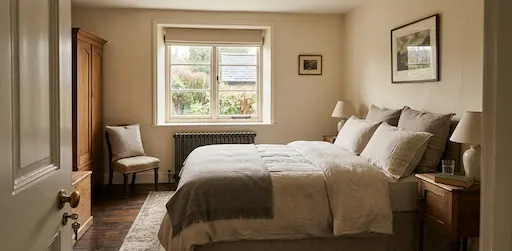
At the start of 2026, something shifted in the conversations UK hosts were having with each other. In Facebook groups, at local host meetups, in property forums, the same word kept appearing: slump. Fewer enquiries. Longer gaps between bookings. The calendar that looked reassuringly full at the same point last year now showing stretches of white space. Some hosts were quietly reducing their rates for the first time in years. Others were wondering whether something more structural was happening that they had not anticipated when they first listed their rooms.
In January 2026, the Express reported that Airbnb owners across the UK were describing themselves as "at a loss" in the face of what they were calling a massive bookings slump. It was not a niche concern. Hosts in coastal towns, in market towns, in cities, in areas that had always been reliably busy were reporting the same experience. The nervousness was widespread. And behind the anecdote, the data tells a coherent story, though perhaps not the one most hosts expected to find when they went looking for an explanation.
What the data shows is something rather more interesting than a simple collapse in demand. It shows a market that is becoming sharply more selective, more stratified, and more unforgiving of mediocrity. The guests are still out there. They are still planning trips, still looking at listings, still spending money on accommodation across the UK. They are just not booking properties that feel interchangeable with the dozens of others competing for the same position on the same page of results. Understanding that distinction, and acting on it before the next booking season bites, is the difference between a host who comes through this moment in a stronger position than they went into it and one who does not.
Why UK short-term let bookings are down in 2026
The slump is real, but it is not what most hosts think it is. It is not a collapse in the desire to travel. Domestic leisure travel in the UK has remained resilient through economic pressures that would have decimated it in previous decades. People still want a few nights away from their own lives, a change of scenery, the pleasure of waking up somewhere that is not their own home. What has changed, and changed significantly, is the supply side of the equation.
According to data from the Office for National Statistics, the UK short-term let market saw supply grow by more than ten per cent in the year to June 2025, reaching 93.8 million guest nights. That growth did not reflect equivalent growth in demand. It reflected a wave of new hosts who entered the market during and after the pandemic, attracted by the promise of supplementary income, who listed on Airbnb and Booking.com without any particular strategy beyond making the room presentable and setting a competitive rate.
The result is arithmetic, not catastrophe. The same guests spread across more listings means lower occupancy across the board. Every new listing in a given area dilutes the visibility of every existing one. The algorithm that once pushed a well-reviewed property to the top of results now has more competitors to weigh it against. Add to this the VisitBritain data showing that by January 2026 active listings had grown a further four per cent year on year whilst nights actually booked had fallen, and the picture is clear. The market is not shrinking. It is becoming more competitive, and generic properties are bearing the greatest burden of that competition.
There is a second dynamic alongside the supply surge that many hosts have not fully reckoned with. Cost of living pressures have made UK guests considerably more discerning about discretionary spending. A guest who would previously have booked a reasonably priced room without much deliberation is now spending longer comparing alternatives and applying a higher implicit standard to what they consider worth booking. The threshold for "good enough" has risen. Rooms that filled easily in 2022 or 2023 are now sitting empty for weeks, not because there are no guests looking, but because those guests have decided they are not the right room for the money.
The guests are still looking. They are simply becoming better at telling the difference between a room worth booking and one that looks like every other listing on the page.
Why a generic holiday let listing stops converting in a saturated market
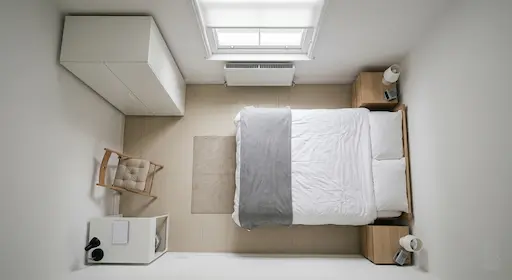
When a guest opens a listing page and sees a clean, neutral room with white walls and a neatly made bed, their brain processes the image and moves on. Not because the room is unappealing. Because it is not distinguishable. It looks like the room above it in the search results and the room below it. The photographs are competent. The description mentions the comfortable bed and the fast Wi-Fi and the convenient location. The reviews say it was clean and the host was helpful. And the guest has no particular reason to click through rather than continuing to scroll, because nothing in the listing has given them a reason to stop.
This is a problem that did not matter very much when there were fewer listings competing for the same guest. When supply was constrained, guests booked what was available. Now that supply is generous, guests book what is appealing. And what is appealing is not clean and functional, though those things remain necessary. What is appealing is specific. Particular. The kind of room that a guest can describe to a friend without resorting to "it was nice." The room that made them feel something when they saw the listing, and delivered on that feeling when they walked through the door.
The research on this is unambiguous. Our earlier piece on why guests do not come back explored the psychology in detail: guests remember stays through what psychologists call the peak-end rule, meaning they retain vivid memories of the most emotionally intense moment and the way the stay ended. A room with no distinctive quality has no peak. The stay averages out to acceptable, and acceptable is not memorable enough to displace the appeal of somewhere new next time.
What makes this particularly costly is that the effects compound invisibly. A generic room at fifty-five per cent occupancy this year will likely do worse next year, because it builds no base of returning guests and generates no word-of-mouth to bring new ones. Every booking comes through a platform, which means every booking is subject to commission, algorithm changes, and competition. The host who styled their room two seasons ago and now has guests who book direct, who no longer need Airbnb to find a room they already know they love, is running a fundamentally different and more resilient business.
In a market with abundant supply and selective guests, a room without a peak is a room that will consistently underperform. Not because it is bad. Because it is the same.
Why cutting your nightly rate will make the Airbnb slump worse
The instinctive response to falling occupancy is to lower the price. It is the response that platforms quietly encourage, through nudge notifications suggesting that a listing is "priced above similar properties in your area," and it is the response that feels most immediately rational: if people are not booking, perhaps the room is too expensive. Drop the rate, fill the calendar, wait for the market to recover.
The problem with this logic is that it misidentifies the cause of the vacancy. If the room is empty because guests cannot afford it, a price reduction helps. If it is empty because it does not stand out in a saturated market, a price reduction simply attracts a different and generally worse type of guest whilst permanently training the algorithm to rank the property in a lower price tier. And once a listing has established itself there, climbing back out is considerably harder than most hosts anticipate.
There is also the question of what kind of guests a discounted rate attracts. The guests most worth having, the ones who look after the room, leave detailed five-star reviews, and come back without being incentivised, are not primarily motivated by price. They are motivated by the feeling that a stay will give them something they cannot get from a cheaper alternative. That feeling comes from distinctiveness, not from cost. A guest who books because it is the cheapest option will leave the moment something cheaper appears. A guest who books because it is the room they specifically wanted will not.
As our guide to the hidden cost of a generic BnB room makes clear, the long-term revenue loss from perpetually attracting price-sensitive guests adds up to a very significant number over the course of a few booking seasons. The calculation is not just about the lower nightly rate. It is about the lower review quality, the higher turnover of first-time guests, the absence of word-of-mouth referrals, and the ongoing platform dependency that comes from never building a loyal base that books direct. Lowering the price to fill a generic room is solving the wrong problem. The question to ask is not how to make the room cheaper. It is how to make the room worth its current price to a guest who is choosing between twenty options that all look broadly similar.
How to differentiate your BnB or holiday let in a crowded market
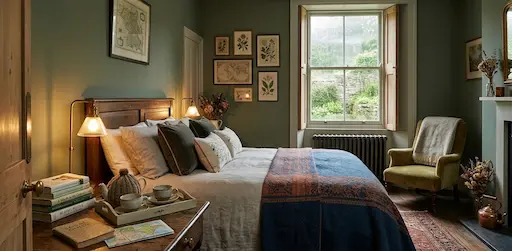
Differentiation in the short-term rental market does not mean spending money on new furniture, or adding an en suite, or installing a smart television. These things cost a great deal and move the needle very little on whether a guest feels that a room is worth booking over its competitors. Differentiation means giving the room an identity that a guest can recognise, name, and describe to someone else. It is the difference between a room that a guest stays in and a room that a guest tells people about.
VisitEngland's Sense of Place framework, which informs how properties are assessed for star ratings, uses exactly this language. Our piece on what VisitEngland's Sense of Place means for your star rating explores how tourism assessors evaluate whether a room feels specifically connected to its location and character, or whether it could be anywhere. The framework is telling hosts something the booking data now confirms: guests want to feel somewhere, not just anywhere. They want the room to feel like it grew out of a specific place and intention rather than being assembled from whatever was available at the nearest furniture wholesaler.
The distinction matters commercially, not just aesthetically. A room guests describe as being somewhere specific commands a premium over one that could be anywhere, because it offers an experience rather than a commodity. In a market where commodities compete purely on price and availability, being an experience is a meaningful competitive advantage that no amount of additional supply can simply replicate.
A room with a clear coastal identity gives a guest something to anticipate before they arrive, something to experience on arrival, and something to describe afterwards. The moment they open the door and see a room that delivers on the promise of its listing photographs is a moment of genuine pleasure. The fishing net above the bed, the nautical cushions, the rope detail on the curtain, the sense that someone has thought carefully about what the room should feel like, these things create the peak moment. That peak is what the stay will be remembered by, and that pleasure is what brings guests back and causes them to recommend it in terms specific enough to make a friend want to book.
The practical steps are more straightforward than most hosts expect. Effective differentiation in a guest room does not require a renovation. It requires a decision about what the room is, followed by a coherent set of details that deliver that decision consistently. The decision is the hard part. The execution, once the decision is made, is simpler than most hosts imagine.
Give the room a name and commit to it
The most memorable holiday let rooms have a name that tells the guest what kind of experience they are walking into. Not "Room 3" or "the double room with sea views," but something with the identity built into it: The Coastal Room, The Harbour Room, The Fisherman's Loft. A name creates an expectation, and a room that consistently delivers on that expectation is one that guests talk about and look for again. It also gives guests something specific to type into a search field. "That coastal room in Whitby" is a search query and a recommendation. "That nice room we stayed in" is neither.
Choose one theme with conviction. It should feel coherent with the property's location and character, specific enough to be distinctive without excluding too broad a range of guests. Coastal works across a very wide range of UK properties because the country's cultural relationship with the seaside is deep and geographically dispersed: guests an hour from the coast respond to coastal references as a shorthand for relaxation and holidays. Once you have the name, every subsequent decision in that room should serve it. If a detail does not belong to the story, it does not belong in the room.
Design the arrival moment deliberately
Stand in the doorway of your room and look at it for ten seconds as if you have never seen it before. What is the first thing you notice? If the honest answer is "nothing in particular," the room has no peak and the guest's stay will begin at a neutral level that it is unlikely to rise above. The wall opposite the door, or the wall above the bed, is the most valuable real estate in the room. Whatever occupies that space is what the guest will see first and remember longest. This is the moment that creates the emotional peak the stay will be judged by.
In a well-styled room, this moment is designed. The guest walks in and the room makes an immediate, specific impression. There is a focal point that anchors everything around it and tells the guest in a single visual moment what kind of place this is. In a generic room, the arrival moment is neutral — the guest registers that everything is in order, and no peak is created. Without a peak, the stay will not be vivid enough in six months to generate a return booking or a referral. Our guide to styling a BnB room covers which focal elements create the strongest first impression and what they typically cost.
Find the one detail that earns a mention
Every room that generates enthusiastic word-of-mouth recommendations has one detail that earns a mention when the guest is describing the stay to a friend. Not the cleanliness. Not the comfortable mattress. A specific, characterful detail that belongs to the room's identity and rewards close attention. In a coastal room it might be the starfish and rope woven into a fishing net above the bed. It might be the jute tie-back on the curtain. It might be the painted driftwood sign beside the window, or the seahorse charm hanging from the curtain rail. The detail does not have to be expensive. It has to be particular enough to earn the sentence "and there was this thing in the room that I just loved."
This sentence is worth more than its apparent simplicity suggests. It causes a friend to ask a follow-up question. It is the beginning of a recommendation that converts. It is the difference between a guest who says "it was a nice stay" and one who volunteers the story unprompted, with enough specificity to make whoever is listening want to go there. One good detail, consistently present, is the mechanism that generates that story.
Relist the room as an experience, not a set of features
Once the room has an identity, the listing needs to reflect it. Most short-term rental listings describe a room: the size, the amenities, the proximity to local attractions, the thread count of the linen, the distance to the nearest car park. These are features. They answer practical questions. They do not create anticipation, which is the feeling that causes a guest to save a listing rather than scroll past it, to come back to it later, to show it to whoever they are travelling with and say "this is the one."
Write the listing from the moment of arrival: what the guest will see when they open the door, what the room will feel like, why the specific details were chosen. A listing that describes an experience is not longer than one that describes features — it is just written from the guest's perspective rather than the host's, and it speaks to a different part of the decision. Our guide to better Airbnb photos covers how to capture the room's identity in photography that stops a guest mid-scroll.
Work on the nightly rate rather than against it
A room with a clear identity supports a higher nightly rate because it is offering something specific rather than competing purely on price and availability. A guest who books the Coastal Room because it sounds like exactly the kind of experience they want is not comparing it to a cheaper room with a neutral description and similar square footage. They are comparing it to alternatives that offer the same kind of specific, named character, and a well-styled room with good photography and a coherent listing is in a far stronger position in that comparison than a lower-priced generic alternative that happens to be nearby.
The maths compound over time. A room at sixty per cent occupancy with a higher rate, populated by guests who return and refer others, generates considerably more revenue per year than one at seventy per cent on a discounted rate, populated by price-sensitive guests whose reviews, whilst positive, are not specific enough to drive word-of-mouth. Our piece on how to increase your BnB nightly rate explores the pricing psychology in detail, including how to reframe a rate increase in ways guests respond to positively.
The free marketing UK hosts overlook
There is a specific behaviour that has become a reliable indicator of whether a stay was genuinely memorable: whether the guest photographed the room and shared it without any prompting from the host. Not a review. Not a rating. A photograph, taken because the room was worth photographing, shared in a WhatsApp group or on Instagram because the room had the quality that interior designers call photographability: a distinctive visual character that registers clearly in a photograph and communicates something specific about the space.
When a guest walks into a room with a coherent coastal identity — fishing net above the bed, nautical cushions, rope curtain tie-back, starfish charms in the net — a significant proportion will reach for their phone before they have put down their bag. Not because the host asked them to. Because the room is worth photographing and they know it instinctively.
That photograph, shared to a real network of people who trust the person sharing it, is marketing that no platform budget can replicate. It arrives with implicit credibility, reaches people who would never find the listing through search, and comes attached to a personal recommendation with visual proof. Generic rooms are not photographed this way — there is nothing to capture. Over a booking season, the gap in organic reach between a photographable property and a generic one compounds directly into a gap in enquiries.
The practical implication for hosts navigating the 2026 slump is this: the cheapest and most effective marketing available to any UK BnB or holiday let is a room that guests want to photograph. Not a social media strategy. Not a paid campaign. A room worth the photograph.
The KittedStay Coastal Kit is a coordinated set of eight coastal decorative pieces designed specifically for UK BnB and holiday let bedrooms. It gives any room a clear, distinctive coastal identity in under ten minutes, without tools and without replacing existing furniture. Each kit is aligned with VisitEngland, VisitWales and VisitScotland Sense of Place criteria. Full details and delivery information are available on the product page, and the most common questions are answered on the FAQ.
Give your room a story the algorithm cannot commoditise
The 2026 bookings slump is a supply problem. The hosts who will come out of it in a stronger position than they went in are the ones who used this moment to differentiate rather than to discount. A room with a clear coastal identity is not competing on the same terms as the generic room two listings below it. It is offering something specific to the guest who wants something specific — and that guest is worth considerably more than a price-sensitive one-time booking.
Order the Coastal Kit →Frequently Asked Questions
The questions UK BnB and holiday let owners ask most often about the 2026 bookings slump, occupancy, and what to do about it.
It is worth looking carefully at what her listing looks like compared to yours, because in a saturated market the gap between a property that fills and one that does not is almost never about price or proximity. It is about whether the room has a clear, describable identity that a guest can picture themselves in before they book. If her listing photographs show a room with a specific character, a focal point, a sense of somewhere particular, and yours shows a clean, neutral space, the difference in enquiry rate is entirely predictable. The slump is functioning as a filter, removing the bookings that previously went to generic rooms by default simply because there were not enough alternatives. She may have styled her room deliberately, or arrived at something distinctive by instinct. Either way, the outcome is the same: guests choose the room that feels specific over the room that feels like every other listing on the page.
The most common reason a restyled room does not immediately convert is that the listing description has not caught up with the room. New photographs without a rewritten description leave the guest looking at a room with character and reading copy that sounds like every other listing: comfortable bed, great location, fast Wi-Fi. The description needs to do what the photographs cannot, which is tell the guest what it will feel like to be in that room. Lead with the arrival moment: what they will see when they open the door, what the room is meant to evoke, why the specific details were chosen. A guest who can picture themselves in the room before they book is far more likely to make the enquiry. If the description still reads like a feature checklist, rewrite it from the perspective of the guest standing in the doorway for the first time.
The honest answer is that it is considerably easier to differentiate from a position of reasonable occupancy than from one of empty calendars and mounting anxiety. The supply data from the ONS and VisitBritain shows a market that has been adding listings faster than it is adding guests for several consecutive years, and there is no structural reason to expect that dynamic to reverse soon. A property holding its position now is doing so in a market that will become more competitive, not less. The hosts who come through the next two or three booking seasons in the strongest position will be the ones who used the comfortable present to build the kind of loyal guest base and word-of-mouth reputation that insulates a property against algorithm changes, fee increases, and new competitors entering the same area. Differentiation as a proactive choice has a very different cost and timeline than differentiation as a crisis response.
The UK's cultural relationship with the seaside is strong enough and dispersed enough that coastal styling resonates well beyond properties with a sea view. Guests who grew up going to the coast carry an emotional association with coastal references that has little to do with literal proximity and a great deal to do with what the seaside represents: holidays, relaxation, being somewhere that is not work. A coastal room an hour from the shore can feel entirely coherent if the styling is done with conviction and the listing frames the experience accordingly. That said, for properties in genuinely inland rural settings, a countryside, botanical or heritage theme will create a stronger sense of place and a more natural coherence with the location. The principle is identical regardless of direction: one clear identity, consistently executed, is what separates a room that guests remember and return to from one they stayed in once and forgot.
Optimising for a platform algorithm is a reasonable short-term tactic and a fragile long-term strategy. Algorithms change, ranking criteria shift, fees increase, and the platform's interests and your interests do not always align. A host whose bookings depend entirely on algorithmic visibility is exposed to every one of those changes with no buffer. A host who has spent two or three seasons building a room with a distinctive identity, a body of specific and enthusiastic reviews, a core of returning guests, and a genuine word-of-mouth network outside the platform is considerably less vulnerable. The algorithm can place you lower in results and you will still receive bookings, because some of your guests are no longer finding you through search results at all. They are typing your property name directly, or following a recommendation from someone who stayed. That is a form of commercial resilience that no amount of algorithm optimisation can give you, and it starts with a room that is worth seeking out rather than just worth clicking on.
There are two tests worth running. The first is the description test: try to write two sentences about your room that do not mention size, amenities, location, cleanliness, or price. If you cannot manage it, the room does not yet have an identity independent of its practical attributes. The second is the stranger test: show someone who has never seen your room the listing photographs alongside three competitor listings from the same area and ask which they would most like to stay in and why. If yours does not come first, and if the reason given does not involve a specific visual or emotional quality they can name, the room has more work to do. Being too used to looking at a space almost always leads hosts to overestimate how distinctive it feels to a fresh pair of eyes. The guest is always a stranger seeing it for the first time.