Why Your Guests Don’t Come Back:
The Real Reason Repeat Bookings
Are So Rare
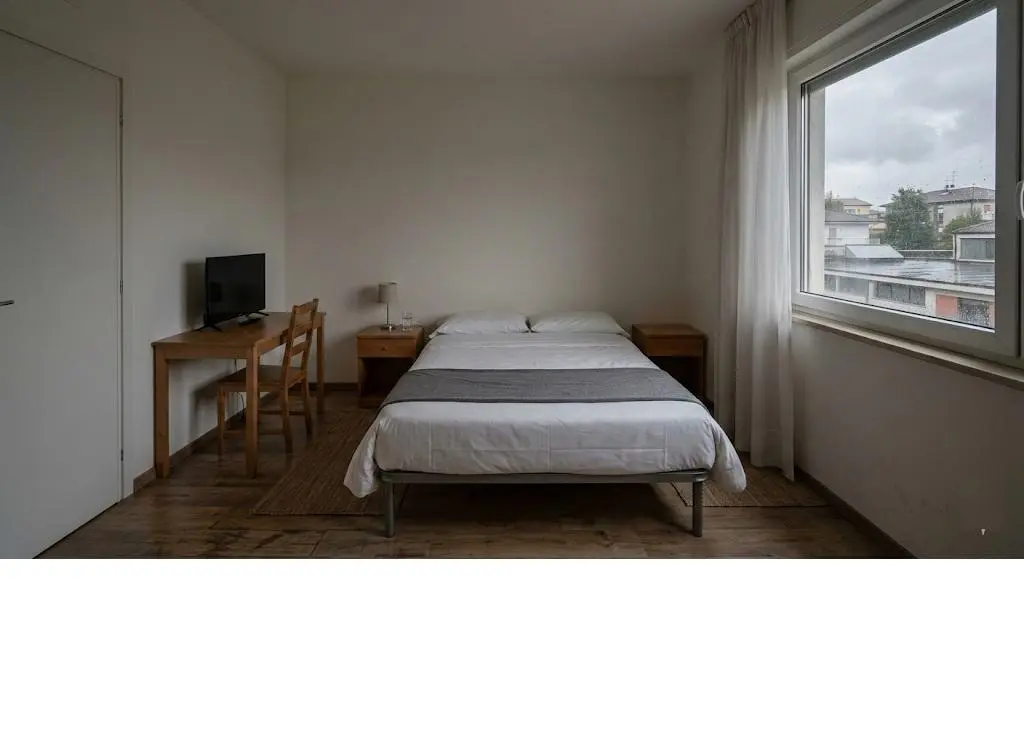
Here is a scenario that almost every UK BnB and holiday let owner will recognise. A guest checks in, the stay goes smoothly, the room is clean, the host is welcoming, and when they leave they say something along the lines of “we’ve had a lovely time, thank you so much.” The review comes through a few days later — four stars, perhaps five, a few kind sentences about the comfort and the cleanliness and the helpfulness of the host.
And then nothing. The guest does not return. They do not refer the property to a friend. They do not tag the location on Instagram. They do not become one of those guests — every host knows the type — who come back year after year, who book the same week in the same room because the place has become genuinely meaningful to them.
They simply go somewhere else next time. Not because anything went wrong. Because nothing was memorable enough to bring them back.
“Satisfied guests leave good reviews. Memorable stays create returning guests. The gap between satisfied and memorable is where most UK holiday let owners are quietly losing a fortune.”
This article is about that gap. Not about what goes wrong — most hosts are very good at fixing problems. About what has to go right, beyond cleanliness and comfort, to turn a one-time guest into a guest who comes back, tells their friends, and becomes a source of recurring revenue that no algorithm, no platform fee and no booking commission can take from you.
The satisfaction trap
The hospitality industry has a concept called the satisfaction trap, and it is one of the most underappreciated dynamics in short-term rental hosting. It works like this: most hosts invest their time and attention in ensuring guests are satisfied — that nothing goes wrong, that the room is clean, that check-in is smooth, that complaints are handled promptly. These are entirely reasonable priorities. They are also entirely insufficient for generating repeat bookings.
Satisfaction is the absence of disappointment. It is a threshold, not a destination. A guest who was satisfied has had their expectations met. A guest who will return has had their expectations exceeded in a way they can remember, describe and act on — by coming back, by recommending the property, by posting about it in the way people post about experiences that meant something to them.
The research on this is consistent and has been for decades. A landmark study published in the International Journal of Hospitality Management found that guest satisfaction and guest loyalty are related but not identical. Satisfied guests do not reliably return. Guests who experienced something they described as “memorable” or “distinctive” did — at rates that were significantly and measurably higher. A separate analysis published by the Harvard Business Review reinforced this finding: emotionally connected guests are more than twice as valuable as highly satisfied ones — they return more often, spend more, and refer more people.
The question, then, is not how to make guests satisfied. Most hosts have already solved that problem. The question is what makes a stay memorable — and why most holiday let rooms, despite being perfectly comfortable, are not.
What the brain actually remembers
To understand why some stays generate return visits and most do not, it is worth understanding something about how human memory works — specifically, how we remember experiences rather than facts.
The psychologist Daniel Kahneman, in research that won him the Nobel Prize, identified what he called the peak-end rule: the way we remember an experience is not a faithful record of its duration or its average quality. We remember it primarily through two moments — its emotional peak (the most intense positive or negative moment) and its ending. The hours in between, which constitute the majority of most stays, contribute relatively little to the memory we carry away.
For a holiday let host, the implications are direct. A guest who stayed in a perfectly comfortable, clean, well-maintained room for two nights will remember very little about it in six months’ time — because there was no peak. There was no moment of genuine delight, genuine surprise or genuine aesthetic pleasure. The stay averaged out to fine, and fine is not memorable.
A guest who walked into a room and felt an immediate, specific sense of somewhere — who saw a wall feature that made them reach for their phone, who found a bed dressed with coordinated, characterful cushions, who noticed that every element of the room was telling the same story — had a peak. That peak is what they will remember in six months. It is what they will describe when a friend asks where they stayed. It is what will make them type the property name into a search engine rather than scrolling through Airbnb listings as if they are choosing between indistinguishable options.
The peak-end rule also explains something hosts often find puzzling: why a guest who encountered a minor problem during their stay — a slow hot water supply, a squeaky door — sometimes leaves a more enthusiastic review than a guest for whom everything was flawless. If the host responded to the problem quickly and warmly, that response became the emotional peak. The guest remembered the care, not the inconvenience. Conversely, a stay where nothing went wrong but nothing was remarkable either produces no peak — and therefore no memory worth acting on.
The three things that actually create a returning guest
Based on what is known about hospitality psychology, guest behaviour in the UK short-term rental market, and the consistent patterns that emerge from well-reviewed properties versus adequate ones, three things reliably separate stays that generate return visits from stays that do not.
1. A room with a clear identity
The single most consistent differentiator between properties that build a loyal guest base and those that perpetually start from scratch with new guests is whether the room has a clear, legible identity. Not an expensive identity. Not a designer identity. A coherent one.
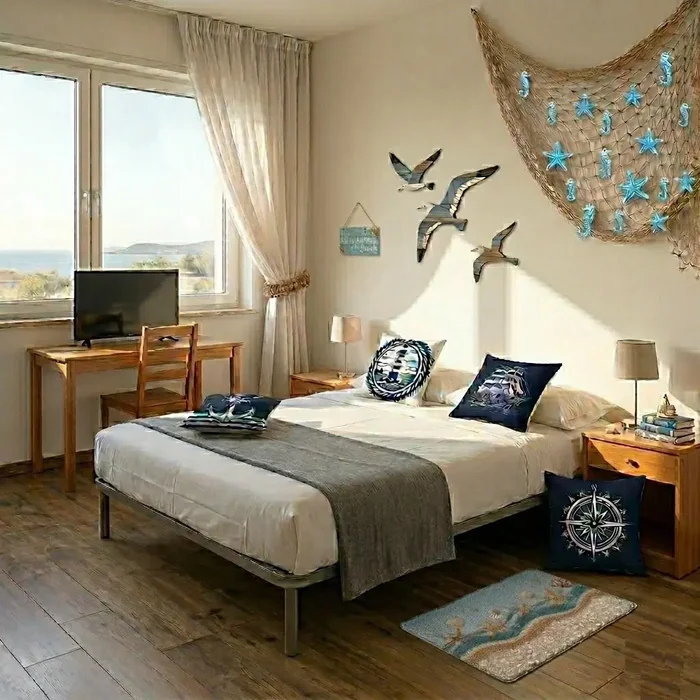
A coastal room where every element — the wall feature, the cushions, the rug, the small details — tells the same story gives a guest something to name. “We stayed in this gorgeous little coastal room,” they will tell a friend. “It had this fishing net on the wall with starfish woven through it, and everything just felt like the seaside.” That description has specificity. It is memorable because it is specific, and it is specific because the room had an identity.
A generic room with cream walls and neutral furnishings gives a guest nothing to name. “We stayed in a nice room” is the beginning and end of the description. It does not invite a follow-up question. It does not give the friend enough information to want to book the same property. It does not create the kind of mental association — “that’s the coastal room we love” — that causes guests to seek out the same property for their next trip.
2. The moment of arrival
The peak-end rule tells us that the emotional peak of an experience is disproportionately important to how we remember it. For a guest staying in a holiday let or BnB, the most likely moment for that peak to occur is the moment of arrival — specifically, the moment they open the room door and see it for the first time.
In a well-styled room, this moment is designed. The guest walks in and the room makes an immediate, specific impression. The fishing net fills the wall above the bed. The cushions dress it with nautical character. The rug anchors the floor beside it. The room is recognisably the room from the listing photograph — and it delivers on the promise of that photograph with something that photographs can only partially convey: the feeling of being in a space that was put together with care.
In a generic room, the arrival moment is neutral. The guest registers that the room is clean, that the bed is made, that everything is in order. There is no peak because there is nothing to peak at. The experience begins at an average level and stays there.
Hosts who have styled their rooms consistently report that guests’ first reaction on arrival is different from what they experienced before. People say something out loud. They pick up their phones. They call through to whoever is with them to come and look. That reaction — spontaneous, specific, immediate — is the peak being created. And it will be part of how that guest remembers the stay for months afterwards.
3. The detail that earns the description
Beyond the overall identity of the room, there is typically one specific detail that becomes the thing a guest mentions when they describe the stay to someone else. Not the cleanliness. Not the comfortable bed. A particular detail that was unusual, specific and memorable enough to earn a place in the description.
In a coastal room, it might be the starfish and seahorse charms woven through the fishing net. It might be the rope curtain tie-back in natural jute. It might be the “Life is Better at the Beach” wooden sign hanging beside the window. Each of these details is small. None of them is expensive. All of them are the kind of thing that earns the sentence: “and there was this detail that I just loved” — which is exactly the sentence that makes a friend want to go to the same place.
Generic rooms have no such detail. Everything is functional, appropriate and without particularity. There is nothing to point to, nothing to describe with affection, nothing that triggers the “oh, you have to see this” reflex that is the beginning of every word-of-mouth recommendation.
Why word of mouth is worth more than any platform
The conversation above — the one where a guest describes their stay to a friend with enough specificity and enthusiasm that the friend goes away wanting to book the same property — is the most valuable marketing a holiday let or BnB can have. It is more trusted than any Airbnb listing. It is more persuasive than any five-star review. And it costs the host nothing.
The short-term rental market in the UK is, at its most fundamental level, a trust market. Guests are spending money on an experience they cannot fully evaluate in advance. They are relying on photographs, descriptions and reviews — all of which they know can be curated and managed. What they trust most is a recommendation from someone they know personally: a colleague who stayed somewhere and came back describing it in enthusiastic detail.
That recommendation happens at the rate of roughly once per guest who found the stay genuinely memorable, and close to zero for guests who found it merely satisfactory. Over the course of a booking season, the difference in referral behaviour between memorable and generic properties compounds: the memorable property builds an informal network of advocates who direct bookings to it outside of any platform; the generic property starts every season dependent on algorithmic visibility and platform fees.
This is the economics of memorability. It is not just about the review. It is about the conversation that happens after the guest goes home and somebody asks them how the trip was.
The photograph they take without being asked
There is a specific behaviour that is becoming an increasingly reliable indicator of whether a stay was genuinely memorable: whether the guest photographed the room and shared it without any prompting from the host.
When a guest walks into a room with a coherent coastal theme — fishing net on the wall, nautical cushions on the bed, starfish charms in the net, a rope tie-back holding the curtains aside — a significant proportion of them will photograph it. Not because the host asked them to. Not because there is a hashtag on the wall. Because the room is worth photographing. It has the quality that interior designers call photographability: a distinctive visual character that registers clearly in a photograph and communicates something specific about the space.
That photograph, shared on Instagram or in a WhatsApp group or on Facebook, is a genuine endorsement reaching a real network. It comes with geolocation data that makes it findable. It comes with the implicit credibility of an unsolicited recommendation. And it works on a timescale that no advertising campaign can replicate: quietly, continuously, each share compounding into the next.
Generic rooms are not photographed. There is nothing to capture. The guest takes a photograph of the view, or the breakfast, or the village — but not the room, because the room does not earn a photograph. This is not a trivial gap. Over a season, a property whose rooms are consistently photographed and shared by guests has a marketing reach that a property with generic rooms cannot access at any price.
What to actually do about it
The analysis above points to a clear practical conclusion: the path to repeat bookings runs through memorability, and memorability in a guest room comes primarily from the room having a clear, coherent, distinctive identity. Not from spending more on furniture, not from adding amenities, not from lowering the price to attract more first-time guests who will not return anyway.
The practical steps are straightforward, and they can be implemented faster than most hosts expect.
Give the room a name and a story
The most memorable stays happen in rooms that have a name. Not just “Room 2” or “the double” — a name that tells the guest what kind of experience they are booking. “The Coastal Room.” “The Harbour Room.” A name implies an identity, and an identity creates a specific thing for guests to remember, return to and recommend. Choose one theme, name the room accordingly, and make sure every element of the room belongs to that story.
Design the moment of arrival
Walk into your room as a first-time guest would. Stand at the door for ten seconds. What do you see? Is there a single element that creates an immediate, positive, specific impression? If the honest answer is no, the room has no peak — and without a peak, the stay will not be remembered vividly enough to generate a return visit. The wall opposite the door, or above the bed, is the first thing a guest sees. Make it earn that moment.
Create one detail worth describing
Identify the detail in your room that a guest would mention first if a friend asked them what it was like. If you cannot immediately name it, the room does not have one. Invest in one specific, characterful detail that belongs to the room’s theme — something that rewards close attention and photographs well. That detail will earn its cost back in word-of-mouth recommendations many times over. Our guide to styling a BnB room covers which details have the highest impact.
Update the listing to match the memory
Once the room is styled, update the listing to reflect its new identity. Name it. Describe the experience of being in it, not just its features. Lead with what the guest will feel when they arrive, not with the thread count of the linen or the size of the television. A listing that describes an experience creates anticipation; a listing that describes features creates a checklist. Anticipation is what brings guests back. Our guide to better Airbnb photos covers how to capture the room’s identity in a listing photograph.
Invite the review while the memory is fresh
The best time to invite a guest to leave a review is within 24 hours of check-out, while the peak-end memory of the stay is still vivid. A short, warm message that references a specific detail of the room — “we hope you enjoyed the coastal room” — reminds the guest of the thing that made the stay distinctive, which is exactly what they need to be reminded of in order to write a specific, enthusiastic review rather than a generic one.
The guest who never needed to search again
There is a particular kind of guest relationship that represents the highest possible return on investment for a UK BnB or holiday let owner. It is not the guest who books through Airbnb every year after comparing six alternatives and choosing you on price. It is the guest who stopped comparing alternatives years ago because they found a room they genuinely love and see no reason to look elsewhere.
These guests exist at every price point and in every part of the UK. They are not looking for perfection or luxury. They are looking for a room that makes them feel something specific — that gives them a particular kind of pleasure that they have learned they can rely on getting in that specific place. They will pay more for it, not because they have calculated the value, but because the room has become part of how they experience being somewhere they like to be.
Creating that guest relationship begins with a single decision: to give the room a story worth returning to. Not a renovation. Not a redesign. A coherent set of coordinated details that work together to say, the moment the guest opens the door: you are somewhere specific, and we thought about what that meant.
That is the difference between a guest who enjoys their stay and a guest who comes back. It is the difference between satisfaction and memorability. And it is — as it turns out — not nearly as difficult or expensive to create as most hosts assume.
Your guests are not going somewhere else because something went wrong. They are going somewhere else because nothing was specific enough to bring them back. That is the problem. A room with a story is the solution.
Give them a reason to come back.
The KittedStay Coastal Kit — 8 coordinated pieces that give any BnB or holiday let room a distinctive coastal identity in under 10 minutes. Aligned with VisitEngland, VisitWales and VisitScotland criteria. Delivered across the UK within 48 hours.
Get Your Kit from £79Frequently Asked Questions
The questions UK BnB and holiday let owners ask most often about guest loyalty, repeat bookings and what actually makes guests return.
The most direct way is to ask — but the timing matters. A message sent 24 to 48 hours after check-out, while the experience is still fresh, asking simply whether guests would return and what they enjoyed most, will give you more useful information than any formal survey.
What you are listening for is specificity. A guest who says “yes, we loved the coastal room” is describing a memory. A guest who says “yes, it was a nice stay” is confirming satisfaction without describing anything. The former is likely to return; the latter is statistically unlikely to, regardless of what they say.
You can also look at your booking data over time. What proportion of your bookings are from guests who have stayed before? For most UK BnB and holiday let owners, the honest answer is very low — often under 10%. A well-styled, distinctive room with a name and an identity can move that figure meaningfully within a single season.
A five-star review confirms that the guest was satisfied. It does not confirm that the stay was memorable enough to override the instinct to try somewhere new next time. These are different things, and confusing them is one of the most common mistakes hosts make when evaluating the health of their business.
Read the language of your five-star reviews carefully. Do they mention specific details of the room? Do they use words like “beautiful”, “special” or “unique”? Or do they use words like “comfortable”, “clean” and “good value”? The second set of words describes satisfaction. The first set describes memorability. Only memorability drives return visits.
If your five-star reviews are consistently in the “comfortable and clean” category, the room is doing its job but not creating a peak — and without a peak, the stay will not be vivid enough in six months’ time to override the appeal of somewhere new.
A discount can be a useful tool, but it should not be the primary mechanism for driving repeat bookings — and it definitely should not substitute for making the room memorable. A guest who returns because of a discount is a price-sensitive guest. They will leave again the moment a competitor offers a similar discount. A guest who returns because the room gave them a genuinely distinctive experience is a loyal guest. They are much harder to poach.
If you want to use a discount, use it as a nudge for guests who were clearly delighted by their stay — the ones who left specific, enthusiastic reviews and who you believe would return anyway. A message saying “because you clearly loved the coastal room, here is a small thank-you for your next booking” reinforces the specific memory of the room rather than simply making a generic price offer.
But the room has to be worth coming back to before the discount has any power. A discount on a generic room is just a cheaper version of the same forgettable experience.
Very important — and consistently underestimated. The peak-end rule tells us that the end of an experience is disproportionately influential on how we remember the whole thing. A stay that was excellent throughout but ended with a rushed or impersonal check-out will be remembered less warmly than one that ended with a warm, unhurried goodbye and perhaps a small gesture — a note, a local product, a genuine expression of interest in whether the guest enjoyed themselves.
The practical implication is that the final interaction between host and guest matters as much as any other element of the stay. A handwritten thank-you note left in the room. A text message the morning of departure wishing them a good journey home. A small, local item left as a parting gesture. These cost almost nothing and contribute disproportionately to the final emotional note on which the stay ends — and therefore to the memory the guest carries away.
Combined with a room that created a genuine peak on arrival, a warm and specific ending creates the best possible conditions for a guest to think: we should come back to that place.
Word-of-mouth recommendations happen naturally when a guest has something specific to say about the stay. The more specific the something, the more likely it is to generate a recommendation — because specificity makes a recommendation credible and actionable. “You have to stay at this place” is a weaker recommendation than “you have to stay in the coastal room at this place, it has this fishing net on the wall and it just feels completely like the seaside.”
You cannot force specificity. But you can create the conditions for it, by giving the room specific, distinctive details that guests will naturally mention when they describe the stay. The detail does not have to be expensive or elaborate. It has to be unusual enough to earn a mention — to be the thing a guest says when they are telling the story of where they stayed.
You can also ask directly. A message after check-out that says “if you know anyone who might enjoy the coastal room, we would genuinely appreciate you passing on the details” is direct, personal and far more effective than any referral programme or incentive scheme. People refer places they loved. Your job is to give them something to love specifically enough to describe.
It should feel coherent with the location, but it does not need to be literal. A coastal theme works best when the property is within reasonable travelling distance of the coast — broadly speaking, anywhere in the UK qualifies, given the country’s geography and the cultural resonance of the seaside. The theme does not need a sea view to feel authentic. It needs to feel like a deliberate celebration of a coastal character rather than a random decorative choice.
For properties in genuinely inland locations — the Cotswolds, the Lake District, the Yorkshire Dales, the Scottish Highlands — a countryside, botanical or heritage theme creates a more coherent identity and a stronger sense of place. The principle is the same regardless of theme: one clear direction, coordinated execution, a room that knows what it is. The theme that generates the most loyal guests is the one that feels most specifically right for the place — because that specificity is exactly what makes the stay feel irreplaceable.
Our guide to VisitEngland’s Sense of Place criteria explores this in more detail, including how tourism assessors evaluate the authenticity of a room’s relationship to its location.