Better Airbnb Photos:
The One Thing Most Hosts Overlook
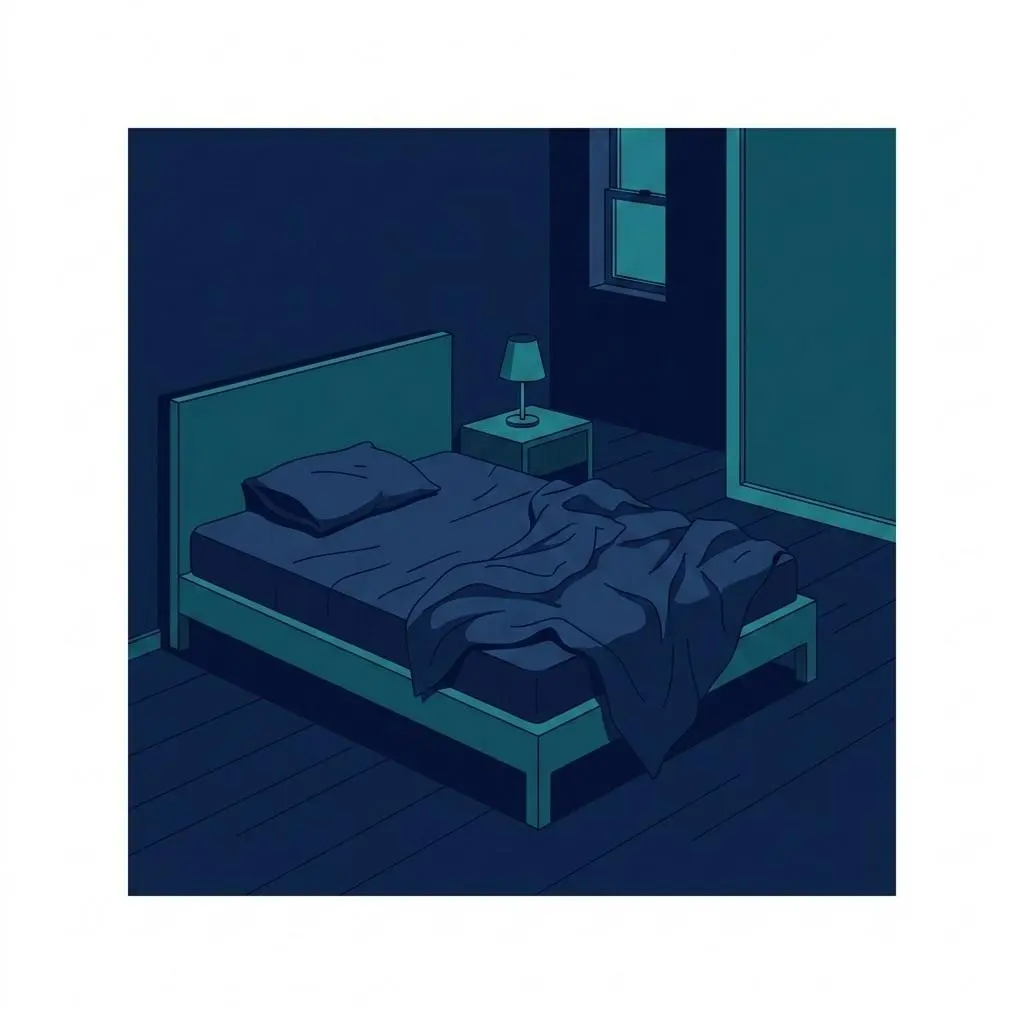
Every year, thousands of UK BnB hosts and holiday let owners make the same investment in the same order. They style their room approximately as it is. They hire a professional photographer — or borrow someone with a decent camera. They upload the results to their Airbnb or Booking.com listing. And then they wait for the bookings to improve.
Sometimes they do. More often, they do not — not meaningfully, not in proportion to the cost and effort involved. And the host is left wondering what went wrong.
The answer, almost invariably, is not the photography. The photography is fine. The answer is what was in front of the camera.
“A professional photograph of a generic room is a professional document of a missed opportunity. The camera did not fail. The room did.”
This is the one thing most hosts overlook when trying to improve their Airbnb listing photos: the photograph is not the product — the room is. And until the room itself has something worth photographing, no lens, no lighting rig and no editing software will produce an image that meaningfully outperforms the competition.
This article explains why that is the case, what the research says about it, and exactly what to do about it — starting with the room, not the camera.
What guests actually see when they search
To understand why the room matters more than the photograph, it helps to understand the environment in which that photograph will be seen.
When a guest searches for a holiday let or BnB on Airbnb, Booking.com or VRBO, they are presented with a grid of listings. Each listing is represented by a single image — the cover photo — alongside a price, a location and a star rating. That is it. That is the entire first impression.
On a desktop screen, that thumbnail is approximately 300 pixels wide. On a mobile phone — where the majority of Airbnb searches now take place — it is smaller still. The guest is scrolling quickly, comparing multiple properties, making shortlist decisions in fractions of a second based almost entirely on what they see in that thumbnail.
In that environment, image quality in the technical sense — resolution, sharpness, accurate colour rendering — matters very little. A well-exposed image of a bland room and a slightly underexposed image of a striking room will produce the same outcome: the guest clicks on the striking room.
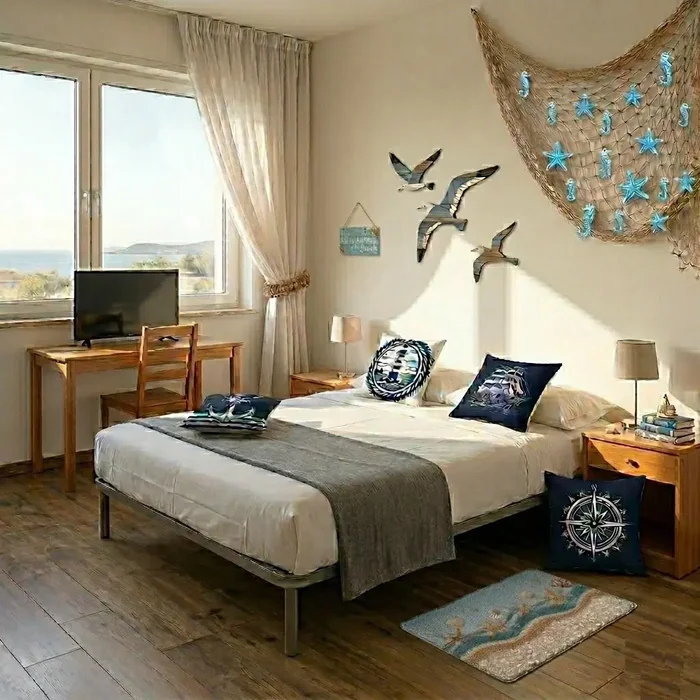
What registers in three seconds and 300 pixels is not technical quality. It is distinctiveness. It is the immediate, legible sense that this room is somewhere — that it has a character, a point of view, a story. A fishing net on a wall. A coordinated set of nautical cushions on a crisp bed. A coastal rug against warm floorboards. These elements read at thumbnail size. A cream wall with a generic framed print does not.
Research published in the Journal of Interactive Marketing confirmed this directly: the content of the background image in an Airbnb listing — specifically the presence of distinctive interior design elements — has a statistically significant and economically meaningful impact on booking rates. The effect of design content was larger than the effect of photographic improvements such as brightness and contrast. The room drives the result. The camera captures it.
Why professional photography alone does not solve the problem
Professional photography has genuine value for holiday let and BnB listings. Airbnb has consistently reported that listings with professionally verified photography earn significantly more per night than those without. That finding is real, and for a well-styled room, professional photography is a worthwhile investment.
The problem is the order of operations. Many hosts hire a photographer before the room is ready — before it has been styled, before it has a coherent visual identity, before it has the kind of distinctive elements that register at thumbnail size. The photographer does an excellent job with what is in front of them. They find the best angle, they balance the light, they deliver sharp, well-composed images. And those images are technically superior to what the host had before.
But they are technically superior images of the same room. The guest still sees a cream wall, a flat-pack wardrobe and a duvet cover in a non-committal neutral. The improved photography has documented the room's anonymity more professionally. It has not changed what the room communicates.
The sequence that actually works is different:
Define the room's story first
What theme does the location naturally suggest? Coastal, countryside, botanical, heritage? Choose one direction and commit to it. This decision costs nothing and informs every subsequent choice.
Style the room with coordinated elements
Introduce a small number of well-chosen, thematically coherent pieces: a wall feature, coordinated cushion covers, a bedside rug, repeating details. Eight coordinated pieces create a stronger impression than twenty unrelated objects.
Then photograph
Now the room has something worth photographing. A professional photographer working with a well-styled room will produce images that genuinely stand out in search results — because the room itself stands out.
This sequence sounds obvious when stated plainly. But the majority of UK BnB and holiday let owners do it the other way around — or skip the styling step entirely and hope that better photography will compensate. It does not.
What makes a room photogenic: the specific elements that work
Not all styling decisions are equal in front of a camera. Some elements that look appealing in person photograph poorly; others that seem minor in person create a disproportionate impact in images. Understanding which is which is valuable, because it focuses investment where it matters most.
Wall features: the single most photographed element
In virtually every well-styled BnB and holiday let, the most photographed element is the wall. Not the bed. Not the view. The wall — specifically, a wall that has been given something interesting to say.
A decorative fishing net with starfish and seahorse charms woven through it occupies a large area of the wall, creates immediate coastal atmosphere, and is distinctive enough to appear in the background of every photograph a guest takes in the room — not just the listing photos, but every informal photo taken during the stay. It is, in the most literal sense, the backdrop of the guest's experience of the room.
Three wooden seagulls in flight, arranged across a wall above a bed, achieve the same effect differently — movement, warmth, character. Three coastal art prints in coordinating frames create a gallery wall that reads clearly at thumbnail size and tells the guest exactly what kind of room they are in.
Blank walls are the single most common missed opportunity in UK holiday let photography. They are large, they are prominent, and they say nothing. A wall feature that belongs to a coherent theme costs relatively little and returns its investment every time a guest clicks, books, or shares a photograph of the room.
The bed: where coordinated textiles do their work
The bed is the visual centrepiece of most guest room photographs. It occupies more of the frame than any other element, and it is often the first thing a guest's eye lands on when evaluating a listing image.
Coordinated cushion covers — four covers in matching nautical designs, for instance, or botanical prints for a countryside room — transform the bed from a piece of furniture into part of a story. They are washable, replaceable, and they fit over the pillows already in the room. In listing photographs, they add colour, pattern and theme simultaneously. The critical word is coordinated: four cushion covers chosen from the same visual world create a coherent impression. Four cushion covers chosen independently, on different occasions, from different shops, create visual noise that photographs as clutter.
A coastal bedside rug — starfish and shells against a sandy, natural palette — placed beside the bed adds texture, colour and pattern to the floor, which photographs surprisingly well in a wide-angle room shot. It is also a detail that guests interact with every morning and evening of their stay, which contributes to the overall experience as well as the image.
Repeating details: how themes gain their power
A single thematic element in a room says very little. The same element, echoed in three or four places across the room, says: this room knows what it is. That coherence is what guests describe in reviews, photograph on their phones, and remember when they are deciding where to stay again.
A rope curtain tie-back in natural jute echoes the fishing net. A wooden “Life is Better at the Beach” sign echoes the cushion covers. Starfish charms woven through the net echo the rug. None of these elements is remarkable in isolation. Together, they create an environment with a clear, legible identity — and that identity photographs as distinctiveness.
The thumbnail test
Before finalising any room's styling for photography, apply what we call the thumbnail test. Open your current listing on your phone. Look at the cover image at the size it appears in search results. Now ask: is there a single element in that image that is immediately readable at this size — that communicates character before you have zoomed in?
A fishing net with charms. A cluster of seagulls in flight. A bold coastal rug against warm floorboards. These pass the test. A cream wall with a framed print does not. A generic duvet cover in a neutral does not. If your current cover image fails the thumbnail test, it is failing with every guest who scrolls past it in search results — which is most of them.
Practical photography: getting the most from a well-styled room
Once the room has been styled with a coherent theme and distinctive elements, the photography itself becomes significantly more straightforward. A well-styled room is forgiving of minor technical imperfections in a way that a generic room is not — because the viewer is responding to the content, not the technical execution.
That said, a few practical principles make a meaningful difference to the quality of the final images, regardless of whether you are using a professional photographer or a modern smartphone.
Natural light is not optional
The single most common technical error in BnB listing photography is shooting in artificial light — or in mixed natural and artificial light, which produces the warm, yellow, slightly murky quality that makes rooms look smaller and darker than they are.
Photograph in daylight. Open every curtain and blind fully. Turn off every overhead light and lamp. Shoot towards the brightest part of the room. If the room faces north and receives little direct sun, choose a bright overcast day rather than a sunny one — diffuse overcast light is more even and more flattering than direct sunlight through windows, which creates harsh shadows and overexposed patches.
Shoot from the corner, low
The most effective holiday let room photographs are almost always taken from a low corner angle — typically with the camera at around waist height, pointed diagonally across the room. This framing captures the maximum amount of space: the wall feature, the bed with its styled cushions, the rug on the floor, and ideally a window or door that gives a sense of the room's relationship to the outside.
Most smartphone cameras, and virtually all professional cameras used for interior photography, have a wide-angle setting that is well suited to this. Use it. A telephoto lens compresses the room and makes it feel smaller; a wide angle opens it and makes it feel more generous.
The cover photo is your most important business decision
The first image in your listing gallery is the only image that appears in search results. All other images are visible only to guests who click through to your listing page — which means they are already interested. The cover photo is doing more work than all the other images combined.
It should show the room at its best angle, featuring the most distinctive element of your theme clearly visible, in excellent natural light, with the bed made and styled to its full potential. If you are hiring a professional photographer, direct them to prioritise this single image above all others. If you are shooting yourself, take thirty versions of this shot and choose the strongest one.
Photograph the details as well as the overview
Close-up images of the individual styled elements — the fishing net with its charms, the cushion covers on the bed, the bedside rug, the hanging sign — serve two purposes. They give prospective guests a vivid, specific sense of the room's character before they arrive, which sets expectations accurately and reduces the gap between expectation and experience that drives negative reviews. And they provide compelling content for your listing gallery that tells the story of the room more fully than a single wide shot can.
The review connection: how photos shape the entire guest experience
Better listing photographs do not only drive more bookings. They shape the entire arc of the guest experience in a way that most hosts do not fully account for.
A guest who books a room based on distinctive, well-styled listing photographs arrives with a specific expectation: that the room will be the room in the photographs. When the room meets that expectation — when the fishing net is on the wall, the cushions are on the bed, the rug is by the door, and the room feels exactly as characterful as it appeared online — the guest experiences what hospitality researchers call expectation confirmation. They feel that the listing was honest, that the host delivered what was promised, and that the decision to book was a good one.
That feeling generates reviews. Specifically, it generates the kind of reviews that mention specific details — “the room was beautifully decorated”, “the coastal theme was exactly as pictured”, “we loved the fishing net on the wall” — which are the most persuasive reviews a property can have, because they give future guests something concrete to respond to.
Generic rooms generate generic reviews, if they generate reviews at all. A room that is clean, comfortable and completely characterless produces the review equivalent of a shrug: “Nice room, clean, good location.” That review does not drive bookings. It simply occupies a slot in the review section.
A themed, well-styled room that matches its listing photographs generates specific, enthusiastic, shareable reviews. And those reviews compound: each one makes the listing more persuasive to the next guest, who books with greater confidence, arrives with accurate expectations, and is more likely to leave another positive specific review in turn.
The social media dimension: photographs guests take for you
There is a category of marketing that holiday let and BnB owners rarely account for explicitly, even though it is often the most effective they have access to: the photographs guests take of the room and share on their own social media.
A guest who stays in a room with a distinctive fishing net on the wall, coordinated nautical cushions on the bed, and a coastal rug on the floor is very likely to photograph it. Not because they have been asked to. Not because there is an incentive. Because the room is photogenic, and photographing beautiful or characterful spaces is what guests do.
When that photograph is shared on Instagram, Facebook or TikTok, it is seen by the guest's network — people who are, broadly speaking, similar to the guest in age, interests and travel habits. It is geographically targeted in the sense that it comes from someone who has actually visited the area. It is credible in a way that paid advertising never is, because it is an unsolicited endorsement from a real person. And it costs the host nothing.
A generic room produces none of this. There is nothing to photograph, nothing to share, nothing for the guest's network to respond to. The room does its job competently and leaves no trace.
For hosts thinking about how to style a holiday let room for maximum impact, the social sharing potential of a well-themed room is one of the most underappreciated returns on what is, in most cases, a modest investment.
Star ratings and the quality assessment connection
For hosts participating in VisitEngland, VisitWales or VisitScotland quality assessment schemes, the connection between room styling and listing photographs extends into official star ratings.
All three UK tourism boards formally assess Sense of Place as part of their quality criteria — the degree to which a property's décor, character and atmosphere reflect its specific location and context. A room with a coastal theme, achieved through a coordinated set of nautical elements, demonstrates Sense of Place clearly to an assessor. A generic room with cream walls and a framed generic print demonstrates nothing.
The practical implication is that the same investment that improves your listing photographs also directly contributes to a higher official star rating. The two outcomes are connected, because both depend on the same underlying thing: a room with a coherent, legible, location-appropriate identity. We explore this in detail in our companion piece, What VisitEngland's Sense of Place Really Means for Your Star Rating.
A higher star rating, in turn, improves your listing's credibility with prospective guests, supports a higher nightly rate, and makes your property eligible for quality-mark marketing from the tourism boards themselves. The photograph, the star rating and the styled room are all part of the same chain of cause and effect.
The checklist: what to do before you call a photographer
If you are considering investing in professional photography for your BnB or holiday let listing — or if you have already invested and the results have been disappointing — the following checklist will help you ensure the room is ready before the camera arrives.
- Choose a theme that is coherent with your location and property type. Coastal, countryside, botanical, heritage — one direction, committed to fully.
- Address the wall opposite the door or above the bed. A large, distinctive wall feature is the single highest-impact styling intervention available to most hosts.
- Coordinate the bed with cushion covers that belong to your chosen theme. Four covers in matching or complementary designs transform the bed from furniture to feature.
- Add a bedside rug that continues the theme. It photographs well in wide-angle room shots and adds warmth and texture at floor level.
- Introduce repeating details that echo the main theme across the room — a curtain tie-back, a hanging sign, charms woven into a wall feature.
- Apply the thumbnail test. Stand back and look at the room on your phone at listing size. Is there a single element that communicates character immediately, before zooming? If not, the room is not ready.
- Then call the photographer.
The photograph that earns its place
There is a test we find useful when evaluating a holiday let listing photograph. It takes about ten seconds.
Open the listing on your phone. Look at the cover image for three seconds. Close your eyes. What, if anything, can you recall about the room? What did it feel like? What was distinctive about it?
If the answer is “not much” — if the image has left no particular impression — that is what is happening in the minds of every guest who scrolls past it in search results. The photograph has not failed to be clicked. It has failed to be noticed. And that is a failure no amount of improved photography technique can fix, because the problem is not the photograph. The problem is what the photograph is of.
Style the room. Give it a story. Make it the kind of place that guests feel compelled to photograph for themselves. Then document that room as well as you possibly can — with a professional photographer, or with your phone in good natural light from a low corner angle.
That is how you get Airbnb listing photos that drive bookings. Not by photographing better. By having something worth photographing.
Give your room something worth photographing.
The KittedStay Coastal Kit — 8 coordinated pieces that transform any anonymous room in under 10 minutes. Aligned with VisitEngland, VisitWales and VisitScotland criteria. Delivered across the UK within 48 hours.
Get Your Kit from £79Frequently Asked Questions
The questions UK BnB and holiday let owners ask most often about listing photography, room styling and what actually drives bookings.
Airbnb recommends a minimum of 10 photos, but the number matters less than the quality and sequence. The cover photo is the only image that appears in search results — it does more work than all the others combined. After that, the next five images should tell a coherent story about the property: the room styled to its best, the key themed elements in close-up, any distinctive features, and a sense of the wider space.
More than 20 photos rarely adds value and can dilute the impact of the strongest images. Curate rather than accumulate. A listing with 12 exceptional photographs of a well-styled room will consistently outperform one with 30 mediocre shots of a generic space.
The most important decision is not how many photos to take — it is whether the room is ready to be photographed. A well-styled room with a clear coastal or countryside identity will produce compelling images at any reasonable quantity. An unstyled room will produce forgettable ones regardless of how many shots you take. Our full guide on how to style a BnB room covers how to prepare the room before the camera comes out.
A modern smartphone — particularly recent models from Apple and Samsung — is entirely capable of producing listing-quality images in good natural light. The gap between a professional camera and a modern smartphone has narrowed to the point where it is rarely the limiting factor for holiday let photography.
The limiting factors are almost always the room and the light, not the camera. A well-styled room photographed in good natural daylight with a smartphone will produce better listing images than a generic room photographed in artificial light with professional equipment. Sort the room and the light first — the camera you already have in your pocket is sufficient.
The one area where a professional photographer adds clear value is in wide-angle capability. Professional interior photographers use dedicated wide-angle lenses that make rooms appear more spacious than a standard smartphone perspective. If your rooms are compact, this difference is worth paying for. If the rooms are generously proportioned, a smartphone on the widest setting will serve well.
The best time is whenever the room receives the most natural, diffuse light — which depends entirely on which direction the windows face. A south-facing room is brightest around midday; an east-facing room is best in the morning; a west-facing room is best in the afternoon. The goal is soft, even, natural light without harsh shadows or overexposed patches from direct sunlight streaming through the window.
Overcast days are often better than sunny ones for interior photography. Direct sunlight creates strong contrast between bright and dark areas that is difficult to balance in a single photograph. Diffuse overcast light fills the room more evenly and produces images that feel warm and welcoming rather than dramatic and contrasty.
Whatever the time of day, turn off all artificial lights before shooting. Overhead lights and lamps introduce warm yellow tones that make rooms feel smaller and darker than they are. Open every curtain and blind fully, let in as much natural light as possible, and shoot with all artificial lights off. The difference is significant and immediately visible.
Always after. This is the single most important sequencing decision in holiday let photography, and it is the one most commonly made in the wrong order. A professional photographer working with a well-styled room will produce images that stand out in search results and justify a premium nightly rate. The same photographer working with a generic room will produce professional documentation of an anonymous space.
The cost of professional photography — typically £150–300 for a holiday let in the UK — is best understood as an investment that amplifies the room it documents. If the room has a coherent identity and distinctive elements, the photography amplifies those qualities and makes them visible to every potential guest who sees the listing. If the room is generic, the photography has nothing to amplify.
The practical sequence is: style the room first, update the listing photograph yourself once the room is ready (to begin capturing the benefit immediately), then invest in professional photography once the room has been validated by improved booking data. By that point you will know the room is worth the investment, and the photographer will have something genuinely worth capturing. See our guide on the hidden cost of a generic BnB room for the financial case for this sequence.
If the photographs are technically good but bookings remain low, the issue is almost certainly what is in the photographs rather than the photographs themselves. Good technical photography of a generic room produces good technical images of a generic room — and generic rooms do not generate clicks in a competitive search results page, regardless of how well they are lit and composed.
Apply the thumbnail test. Open your listing on a mobile phone and look at the cover image at the size it appears in search results — approximately 300 pixels wide. Is there a single element that communicates character and distinctiveness immediately, before you zoom in? If not, the photograph is technically competent but visually inert. It registers as “another room” rather than as somewhere specific worth clicking on.
The fix is not better photography — it is a more distinctive room. A coherent coastal or countryside theme, executed through a small number of well-chosen coordinated pieces, gives the photograph something readable at thumbnail size. The same lens, the same light and the same composition will produce a dramatically different result. We cover this in detail in our guide to why guests don’t come back — the visual identity of the room is the single strongest predictor of both click-through rates and repeat bookings.
Airbnb discontinued its free professional photography programme for new hosts in most markets, including the UK, several years ago. The programme was available in the early years of the platform when Airbnb was actively building supply, but it is no longer offered as a standard benefit for new listings.
Some hosts report being offered photography credits or discounts through Airbnb promotions or as part of Superhost programmes, but these are not consistently available and should not be relied upon as part of a listing strategy. The most reliable approach is to treat photography as an investment to be made at the right time — which, as covered in this article, means after the room has been styled and is genuinely ready to be photographed.
Airbnb does maintain a directory of verified photographers through its platform in some markets. These photographers have been reviewed by Airbnb for quality and familiarity with listing requirements. If you are considering professional photography, searching for Airbnb-verified photographers in your area is a reasonable starting point. Always review their interior portfolio specifically — general photography skills do not always translate to effective interior work.