How to Style a BnB Room
That Gets Booked First
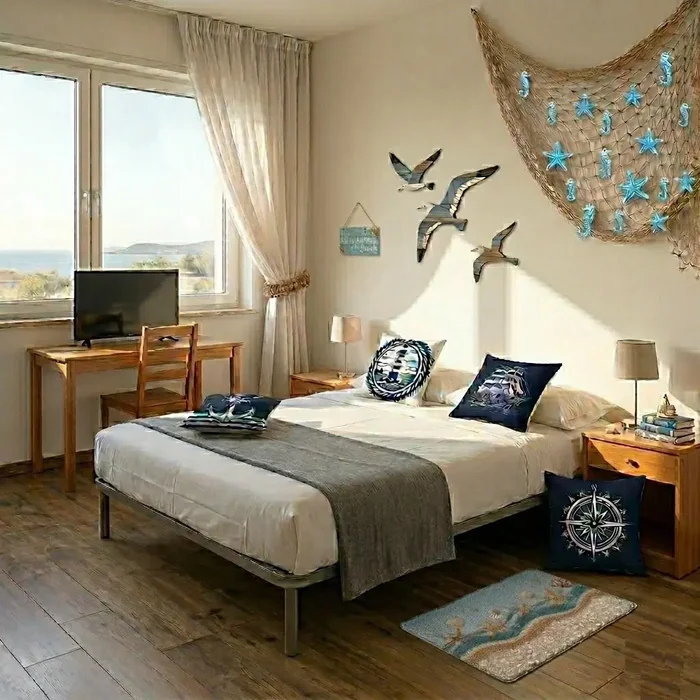
There is a moment that separates a forgettable stay from one that gets recommended.
It is not the thread count. It is not the breakfast spread. It is not even the location — though location matters, it is rarely what earns the glowing review, the unprompted Instagram post, or the returning guest who books again six months later. What earns all of those things, consistently, is holiday let room styling done with intention: a room that feels like somewhere, not just somewhere to sleep.
It is the moment a guest walks through the door and the room tells them something.
We have spent a great deal of time visiting small BnBs and holiday lets across the UK. Most of them are run by genuinely good people — attentive hosts, clean rooms, fair prices, comfortable beds. But most of them are also, in a very particular way, invisible. Not because they are bad. Because they look exactly like everywhere else.
The properties that consistently outperform their neighbours — higher nightly rates, better reviews, longer repeat booking rates, word-of-mouth enquiries — almost always share one characteristic. The room has a point of view. A coastal cottage that feels as though the sea is just outside, even when it is not. A countryside retreat where every corner quietly announces: you are somewhere specific. A city apartment with a personality the guest can photograph, share and describe to a friend.
“The gap between a room that gets booked and a room that gets remembered is smaller than most hosts think. And it rarely costs as much as they fear.”
This article is a practical, honest guide to styling a BnB or holiday let room with that kind of character. Not a decorator’s manifesto. Not a list of expensive renovations. A grounded walkthrough of what actually matters, why it matters, and how to do it — starting this weekend if you choose to.
The market you are competing in
Before we talk about how to style a room, it is worth understanding the environment in which that room will be competing. Because the UK short-term rental market in 2025 and 2026 is not the same market it was five years ago.
According to the Office for National Statistics, guests spent over 90 million nights in UK short-term rentals in 2024. England alone accounted for more than 70 million of those nights. The market is vast — and growing.
But supply has grown too. Airbnb now has over eight million active listings worldwide, with the UK representing one of its most mature and competitive markets. In established holiday destinations — Cornwall, the Lake District, the Cotswolds, the Scottish Highlands — a guest searching for accommodation on any given weekend is presented with dozens, sometimes hundreds, of broadly similar options.
In this environment, the listing photo is your first advertisement. It is often your only advertisement. A guest comparing ten properties in the same area, at similar prices, will make their initial shortlist based almost entirely on images — before reading a single word of the description, before looking at the amenities list, before checking the reviews.
Research published in the Journal of Interactive Marketing examined how listing images affect Airbnb booking rates and found that the content of the background image — the single photo shown in search results — has a statistically significant and economically meaningful impact on bookings. A well-composed interior image showing distinctive design elements can increase booking rates substantially. The photo is not incidental. It is the product.
The implication for hosts is straightforward, though frequently ignored: style the room first, then photograph it. Investing in professional photography before creating a room worth photographing produces professional images of a generic space. The order matters.
Why most BnB rooms look the same — and what that costs you
There is a particular kind of BnB room that is easy to recognise. Cream or off-white walls. A flat-pack wardrobe. A framed print of something vaguely landscape-themed, chosen because it was inoffensive rather than because it said anything. Matching bedside tables from a well-known Swedish retailer. A duvet cover in a neutral that photographs grey regardless of the actual colour.
It is not an ugly room. It is not an uncomfortable room. It is simply a room with no opinion about itself.
The cost of that absence is real and measurable. Research consistently shows that themed, distinctive rooms command higher nightly rates than comparable unthemed ones — typically £10–15 more per night in the UK market. Over 150 nights, that gap represents £1,500–2,200 in revenue that a well-styled room earns and an anonymous one does not.
But the financial cost is only part of the picture. The less visible cost is in reviews. Guests review what surprises them, what they remember, what gave them something to describe. Nobody writes “the room had four walls and a bed” as a five-star review. Character earns words. Words earn bookings.
There is also the cost in social sharing. An instagrammable room — one with a distinctive wall feature, a coherent colour story, something worth pointing a phone at — gets photographed and posted by guests without any prompting. Every post is free, organic, geographically relevant advertising. A generic room produces no such effect, regardless of how comfortable it is.
And finally, for hosts enrolled in quality assessment schemes, there is the cost in star ratings. VisitEngland, VisitWales and VisitScotland all formally assess Sense of Place as part of their star-rating criteria. A room that tells the assessor nothing about where they are is a room leaving potential rating points unclaimed. We cover this in detail in our companion piece, What VisitEngland’s Sense of Place Really Means for Your Star Rating.
What “theme” actually means in practice
When hosts hear the word “theme”, many picture something extreme — a fully immersive experience, custom wallpaper, bespoke furniture, the kind of thing you see in boutique hotels that have had a significant budget and a professional interior designer behind them.
That is not what we mean. A theme, in the practical sense relevant to most BnB and holiday let owners, is simply a coherent visual story told through a small number of coordinated elements. It does not require structural changes. It does not require new furniture. It rarely requires spending more than a few hundred pounds, and often much less.
The key word is coherent. A fishing net on the wall, wooden seagulls as wall art, four cushion covers in nautical designs, a coastal bedside rug and a rope curtain tie-back tell a single, coherent story. The guest walks in and immediately knows something: they are somewhere coastal. The room has an opinion about itself.
The same fishing net in a room with tartan throws, generic art and mismatched cushions tells no story. The pieces are not the problem — the lack of coherence is.
Three principles are worth keeping in mind when thinking about theme:
- Commit to one direction. Coastal, countryside, botanical, industrial, heritage — choose one and let everything belong to it. A room that tries to be two things at once becomes neither.
- You are adding, not replacing. A theme does not mean changing your furniture or repainting your walls. It means introducing a layer of coordinated decorative elements over what is already there. The bones of the room stay the same.
- Less, done well, is more. Eight well-chosen, coordinated pieces create a stronger impression than twenty unrelated objects. Curation matters more than quantity.
The five things that change a room
Based on observation across many UK properties, the elements below consistently make the most meaningful difference to how a room feels, photographs and reviews. None of them requires a designer, a builder or a significant budget.
1. A wall that does something
The most photographed element in any BnB room is almost always a wall feature. Not the bed, not the view, not the furniture — a wall with something on it that earns its place.
In a coastal room, a decorative fishing net with starfish and seahorse charms woven through it creates an immediate, recognisable atmosphere. It is large enough to anchor the wall, specific enough to tell a story, and distinctive enough to appear in the background of every photo a guest takes in the room. In a countryside room, a cluster of botanical prints in matching frames achieves the same effect through entirely different means.
Blank walls are the single most common missed opportunity in BnB rooms across the UK. They cost nothing to address and a measurable amount to ignore — in lost clicks, lost reviews and lost bookings.
2. Coordinated cushion covers
The bed is the visual centrepiece of most guest room photographs. Cushion covers are the single lowest-cost, highest-impact intervention available to most hosts.
Four cushion covers in coordinated designs — nautical motifs for a coastal room, botanical prints for a countryside one — transform a bed from a piece of furniture into part of a story. They fit over pads you already own. They are washable. They can be changed seasonally if desired. And in a listing photo, they are often the first thing a guest’s eye lands on.
The critical word, again, is coordinated. Four cushion covers that belong to the same visual world create an impression. Four cushion covers that were each chosen independently, from different shops on different occasions, create noise.
3. A bedside rug
A rug is one of the most underused elements in holiday let styling. In a guest room, a bedside rug serves two purposes simultaneously: it adds warmth and tactility to the floor, and it introduces pattern, colour and texture in a way that photographs remarkably well.
A coastal bedside rug — starfish and shells, in a sandy, natural palette — placed beside a double bed creates a detail that guests step onto every morning and evening of their stay. It is a small thing with a disproportionate effect on how the room feels, both in person and in photographs.
4. Small repeating details
Themes gain their power from repetition. A single nautical element in a room says very little. The same element, echoed in three or four places, says: this room knows what it is.
A rope curtain tie-back. A wooden hanging sign. Starfish charms on a fishing net. A nautical print beside the door. None of these is remarkable on its own. Together, they create an environment that communicates a clear identity — and that identity is what guests describe in reviews, photograph on their phones, and remember when they are looking for somewhere to stay again.
5. Something that reads in a thumbnail
This is the test that separates a room that gets clicked from one that does not. Look at your listing photo reduced to a 600-pixel-wide thumbnail on a mobile screen. Is there a single element that is immediately readable at that size — that communicates character before the guest has zoomed in?
A fishing net with charms on a wall. A cluster of seagulls in flight. A bold coastal rug against a light floor. These elements are all readable at thumbnail size. A cream wall with a generic print is not.
The Journal of Interactive Marketing study referenced earlier found that listings featuring more interior design elements in their background image saw a statistically significant increase in booking rates. The effect was larger than that of aesthetic improvements like brightness and contrast — meaning it is what you put in the room, not just how you photograph it, that drives bookings.
The photograph question
Once the room has a clear story to tell, the question of photography becomes much simpler. A well-styled room does not require an expensive professional photographer to look good — though professional photography remains valuable and, according to Airbnb’s own data, properties with professional verified photos are booked significantly more often than those without.
What it does require is attention to a few fundamentals that most hosts underestimate:
- Natural light is everything. Photograph the room in daylight, with curtains open. Artificial lighting almost always produces warm, yellow images that make a room feel smaller and darker than it is. Open the curtains, turn off the overhead lights, and shoot towards the brightest part of the room.
- Shoot from the corner. The most effective room photographs are taken from a low corner angle, capturing as much of the room as possible in a single frame. This shows the space, the bed, the wall feature and the floor simultaneously — and it is the angle that most reliably showcases the themed elements you have introduced.
- The cover photo is your headline. The first image in your listing gallery is the only image that appears in search results. Everything else guests see only if they click. Invest the most effort in making that first image as strong as possible — it is doing more work than all the others combined.
- Photograph the details too. Close-up images of the fishing net and charms, the cushion covers, the bedside rug and the wall sign serve two purposes: they give guests a clear sense of the room’s character before they arrive, and they provide content for social media that guests themselves will sometimes replicate when they visit.
Common mistakes and how to avoid them
In visiting and advising on BnB and holiday let rooms across the UK, the same mistakes appear repeatedly. They are worth naming directly.
Buying pieces from different places without a plan
The most common approach to holiday let decoration is accumulative: something from a charity shop here, something from IKEA on a Saturday, something seen in a home magazine bought on a whim. The result is a room full of individual objects that share no visual language. Each piece might be perfectly nice in isolation. Together, they say nothing.
The antidote is to begin with a clear theme and source everything — or use a curated kit — with that theme in mind. Coordination is more important than the quality or cost of individual pieces.
Photographing before styling
Many hosts invest in professional photography before the room is ready for it. Professional photography of an unstyled room produces professional documentation of an opportunity missed. Style first, then photograph.
Over-decorating small rooms
A small room styled with too many elements feels cluttered rather than characterful. In a compact space, the right approach is to select the two or three most impactful pieces — a wall feature, two or three cushion covers, a rug — and keep the rest in reserve as replacements. A well-chosen few creates a stronger impression than an overcrowded many.
Ignoring the entrance
The moment a guest walks through the door of the room, before they have seen the bed or the bathroom or the view, they form an impression. The entrance is often the most photographed moment of a stay — and the most neglected by hosts. A rug, a hanging sign, a single well-placed wall element in the entrance area sets the tone for everything that follows.
Styling once and forgetting
A themed room requires minimal ongoing maintenance, but it does require some. Guests occasionally take a decorative piece as a souvenir — which is, as we noted, a sign that the room made an impression. A room with a missing piece looks incomplete and photographs poorly. Individual replacement pieces, kept in reserve or sourced quickly when needed, keep the room consistent and the story intact.
Holiday Let Room Decoration Checklist: What to Do This Weekend
If you are reading this as a BnB or holiday let owner with a room that currently tells no particular story, the practical starting point is simpler than most hosts expect.
Walk into your room as a guest would
Stand at the door for ten seconds. What does the room tell you? What does it feel like? If the honest answer is “nothing in particular” — that is the answer your listing photo is giving potential guests too.
Choose one theme and commit to it
What is the location of your property? What story does it naturally invite? A coastal location suggests a coastal theme. A rural farmhouse suggests countryside. A city apartment might suggest something industrial or botanical. Choose one direction and do not deviate from it.
Address the wall first
The wall opposite the door — or the wall above the bed — is the most visible surface in most guest rooms. A wall feature that belongs to your chosen theme creates an immediate, readable impression that guests notice from the doorway.
Add coordinated textiles
Cushion covers and a bedside rug in the same visual language as your wall feature reinforce the theme and make the room feel deliberately put together rather than accumulated. They photograph well and are the lowest-cost, highest-impact investment available to most hosts.
Photograph in good daylight from a corner angle
Once the room is styled, photograph it properly. Open the curtains, turn off artificial lights, shoot from a low corner with your phone horizontal. Then update your listing with the new images.
A note on investment and return
The economics of styling a BnB room are straightforward and, for most hosts, highly favourable.
A curated, coordinated set of decorative pieces — the kind that can transform a room’s feel entirely and improve its listing photographs, review scores and booking rate — can be assembled for well under £100 when sourced as a single, coordinated kit rather than piece by piece from separate retailers.
The return on that investment, at a conservative estimate of £10 additional revenue per night over 150 nights, is £1,500 in the first year. The kit pays for itself typically within the first five nights of improved bookings. Every night thereafter is incremental revenue that the unstyled room would not have generated.
The Sykes Holiday Cottages Holiday Letting Outlook Report consistently identifies presentation and perceived quality as among the strongest drivers of nightly rate premiums. In premium UK markets — Cornwall, the Cotswolds, the Lake District, the Scottish Highlands — the differential between a well-presented and a generic listing can be considerably larger than the conservative figures above suggest.
The room that gets remembered
There is a manager we know of who used to stand by the door of his restaurant every evening at six o’clock. Not to greet guests. Just to watch them walk in.
When asked what he was looking for, he said: “I’m watching their shoulders.”
When someone walks into a place that feels right to them — a place with atmosphere, with identity, with a point of view — their shoulders drop. Slightly. Imperceptibly, unless you know to look. The tension of the journey, the uncertainty of the unfamiliar, releases. They have arrived somewhere that feels like somewhere.
That is what a well-styled room does. Not through expensive renovation or designer intervention. Through a fishing net on a wall, a coordinated set of cushion covers, a bedside rug, a wooden sign and a few carefully chosen details that together say: you are somewhere specific, and we put thought into making you feel it.
That feeling is what guests review. It is what they photograph. It is what they tell their friends about. And it is what brings them back.
The room that tells the guest something is the room that gets booked first.
Ready to give your room a story?
The KittedStay Coastal Kit — 8 coordinated pieces that transform any anonymous room in under 10 minutes. Aligned with VisitEngland, VisitWales and VisitScotland criteria. Delivered across the UK within 48 hours.
Get Your Kit from £79Frequently Asked Questions
The questions UK BnB and holiday let owners ask most when thinking seriously about room styling.
The most effective room styling does not require a large budget — it requires a coherent one. Eight well-chosen, coordinated pieces will do more for a room than twenty unrelated objects regardless of their individual cost. Coordination matters more than expenditure.
For a coastal-themed room using a curated kit, the investment is £79 for the full 8-piece set — significantly less than sourcing equivalent pieces individually, which typically costs £120 or more when you account for time spent searching and the inevitable mismatches from accumulative purchasing.
At a conservative £10 more per night over 150 booked nights, the return is £1,500 in the first year. The kit pays for itself in approximately five nights at the improved rate. The hidden cost of a generic room covers this calculation in detail.
The evidence consistently points in the opposite direction. Guests who book a distinctive, characterful room tend to be more invested in the experience than guests who book a generic one. They chose the room because of how it looks — which means they arrive with a degree of appreciation that generic rooms do not generate.
Decorative pieces are occasionally taken as souvenirs — which is, counterintuitively, a positive signal. A guest who takes a starfish charm did so because the room made an impression. The solution is not to remove the piece but to replace it promptly. Individual replacement pieces are available separately. See our FAQ page for details.
The most important criterion is authenticity to the location. A theme that feels like a natural expression of where the property is will always outperform one that feels decorative but disconnected. Guests book holiday lets partly for a sense of place — the feeling that they are somewhere specific, not just somewhere adequate.
For properties within an hour of the coast, a coastal theme is almost always the right choice. The cultural resonance of the British seaside is broad — it appeals across age groups. For rural properties — farmhouses, cottages, properties in national parks — a countryside or botanical theme creates a stronger sense of place. The question to ask is: what would make a guest feel most specifically that they are here?
Lead with the experience rather than the features. Most listing descriptions are written as feature lists — bed size, bathroom type, amenities. These are necessary but they are not what persuades a guest to book a themed room over a generic one at a similar price.
Rewrite the opening paragraph to describe what a guest will feel when they walk through the door. Name the theme explicitly: “a coastal bedroom dressed with nautical cushions, a fishing net wall feature and a bedside rug in a starfish and shells design.” Specificity creates anticipation — and accurate anticipation is what produces five-star reviews.
Update the listing title to include the theme: “The Coastal Room” signals character before the guest has opened the listing. For more on how listing descriptions affect nightly rates, see our guide to 5 low-cost ways to increase your BnB nightly rate.
Yes — directly and formally. VisitEngland, VisitWales and VisitScotland all include Sense of Place as a formal criterion in their quality assessments — evaluating the degree to which a property's décor reflects its specific location.
A room with a fishing net, coastal art prints and nautical cushions in a coastal property scores on this criterion in a way that a generic room cannot, regardless of how clean or comfortable it is. One host in Wales received an additional star specifically because a local photography print gave the room a sense of place the inspector noted. A full coordinated kit goes considerably further. See our dedicated guide: What VisitEngland's Sense of Place Really Means for Your Star Rating.
A well-chosen, coordinated theme does not need seasonal refreshing — it is designed to be permanent rather than temporary decoration. The goal is a room identity that becomes associated with the property in guests' minds and in reviews, which requires consistency over time rather than frequent change.
What does require regular attention is maintenance: checking that all pieces are in place and in good condition after each stay. A missing or damaged piece should be replaced promptly — a room that is 90% of its styled self photographs and presents differently from one that is complete. Individual replacement pieces can be ordered quickly for exactly this purpose.
The one reason to consider refreshing the theme is if the room undergoes structural changes — repainting, new furniture, significant renovation — that alter the backdrop against which the theme sits. Otherwise, a coherent theme that is consistently maintained will continue to earn its return season after season without modification.