5 Low-Cost Ways to Increase
Your BnB Nightly Rate
Most BnB and holiday let owners in the UK are undercharging. Not by a little — in many cases, by £10, £15 or even £20 per night, every night, across a full booking season. That gap compounds: over 150 booked nights, £10 per night is £1,500 per year left on the table. Over three years, it is £4,500.
The most common assumption about why this happens is that the location is not premium enough, or that the competition in the area is too aggressive, or that guests simply will not pay more. In a minority of cases, those assumptions are correct. In the majority, they are not. The reason the nightly rate is lower than it could be is almost always simpler than hosts expect: the room does not look like it is worth more.
Guests do not pay a premium for square footage. They pay a premium for an experience — for a room that tells them something, that feels considered, that gives them a reason to choose it over the virtually identical option at £10 less per night. The properties consistently commanding higher nightly rates in competitive UK holiday let markets are not necessarily the largest, the best located or the most expensively furnished. They are the ones that feel distinctive.
“The gap between a room that earns £79 per night and one that earns £95 per night is rarely about size, location or facilities. It is almost always about feeling.”
This article sets out five specific, low-cost interventions that consistently allow UK BnB and holiday let owners to raise their nightly rates — and sustain those rates — without major renovation, without an interior designer, and without a significant capital outlay. Each one is grounded in what actually drives guest willingness to pay more. None of them involves buying new furniture.
Why guests pay more: the psychology of perceived value
Before examining the five specific interventions, it is worth understanding the underlying mechanism. Why do guests pay more for some rooms than others, even when the functional specifications — bed size, bathroom quality, location — are broadly comparable?
The answer lies in what economists call perceived value: the guest's subjective assessment of what the experience is worth, formed before they arrive and continuously updated during the stay. Perceived value is shaped by a small number of powerful signals, most of which are communicated through the listing photograph before any money changes hands.
Research published by Oxford Economics in their analysis of the UK short-term rental market found that the single strongest predictor of nightly rate premium — after location — is the distinctiveness and visual coherence of the property's interior presentation. Properties with a clear, coherent aesthetic command a measurable premium over functionally equivalent but visually generic alternatives.
The Sykes Holiday Cottages Holiday Letting Outlook Report consistently identifies interior presentation and perceived quality among the top drivers of nightly rate premiums in the UK market. In established holiday destinations — Cornwall, the Lake District, the Cotswolds, the Scottish Highlands — the differential between a well-presented and a generic listing can be substantial.
Understanding this mechanism matters because it reframes the question. The goal is not to spend money on the room. The goal is to change what the room communicates — to shift the guest's perception of its value before they arrive. And that shift, as the five interventions below demonstrate, can be achieved at a cost that is recovered within the first week of improved bookings.
The five interventions
Give the room a coherent theme
This is the single most impactful change available to most BnB and holiday let owners, and it costs less than any other intervention on this list when done efficiently. A room with a coherent visual theme — coastal, countryside, botanical, heritage — communicates to the guest that the property has been thought about. That perception of care translates directly into willingness to pay more.
The key word is coherent. A room with a fishing net on the wall, four nautical cushion covers on the bed, a coastal bedside rug and a rope curtain tie-back tells a single, unified story. A room with a fishing net, a tartan throw, an IKEA print and mismatched cushions tells no story at all — and prices accordingly.
The practical mechanism is straightforward: choose one theme that is natural to your location, introduce a small number of coordinated decorative elements, and remove or retire anything that conflicts with that theme. Eight well-chosen, coordinated pieces will do more for your nightly rate than twenty unrelated objects accumulated over years of opportunistic purchasing.
For a coastal property, or any property within reasonable distance of the UK coastline, a coordinated coastal kit — net, seagulls, nautical cushion covers, bedside rug, art prints, curtain tie-back, hanging sign and charms — achieves this in a single order, without the hours of sourcing that accumulative decoration requires. Read more about how to style a BnB room for maximum impact.
Update your listing photographs to show the styled room
The photograph is the nightly rate. Not in a metaphorical sense — in a direct, causal sense. The guest's decision about what they are willing to pay for a room is made almost entirely on the basis of the listing photograph, before they have read the description, before they have checked the amenities, before they have looked at the reviews.
A room styled with a coherent theme and photographed well — in natural daylight, from a low corner angle, with the bed dressed and the wall feature prominent — justifies a higher price in the guest's mind before they have engaged with any other information about the property. The same room photographed in artificial light, from a flat angle, with no distinctive elements visible, does not.
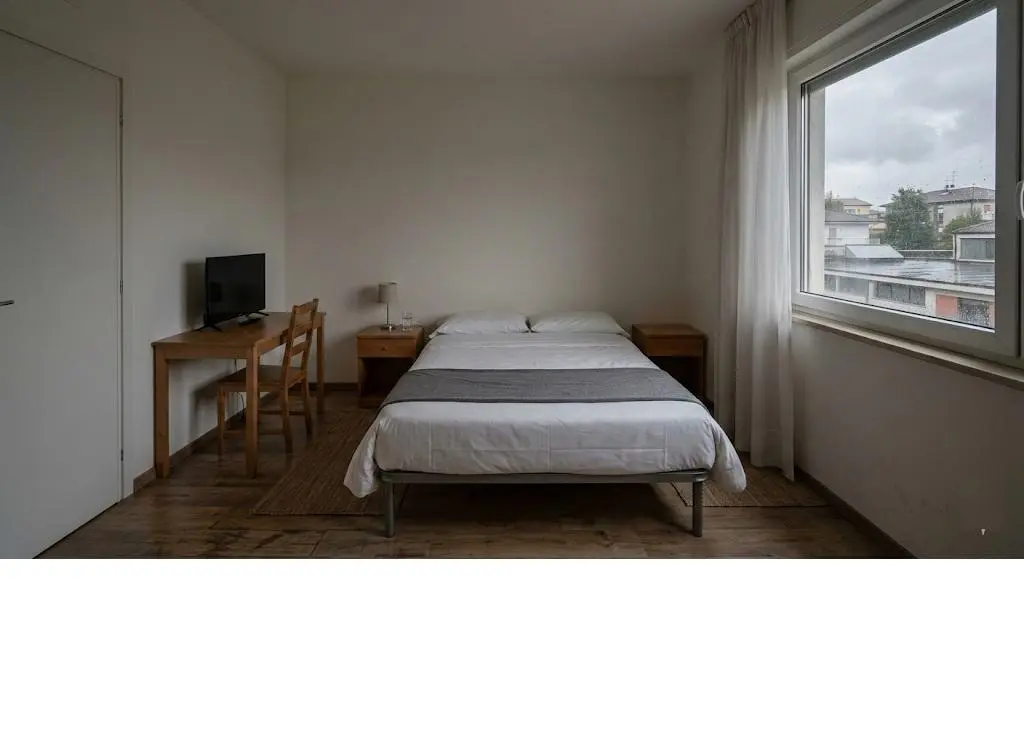
The update costs nothing if you photograph the styled room yourself. It requires only that the room be styled first — that the photograph has something worth showing. A listing photograph that fails the thumbnail test (does a single distinctive element register at mobile screen size, within three seconds?) is suppressing the nightly rate every day it remains the cover image. Updating it, once the room is ready, is the highest-return zero-cost action available to most hosts. We explore this in detail in our guide to better Airbnb photos.
Pursue a higher official star rating
VisitEngland, VisitWales and VisitScotland all assess short-term rental properties against formal quality criteria, awarding star ratings that appear in marketing materials, on booking platforms and in the tourism boards' own directories. A higher star rating is one of the most credible signals of quality a UK property can display — because it comes from an independent assessor, not from the host.
The practical relevance for nightly rates is direct: guests filter and compare by star rating, and properties with higher ratings consistently command higher prices in competitive markets. A move from three stars to four, or from four to five, is a meaningful and measurable competitive advantage.
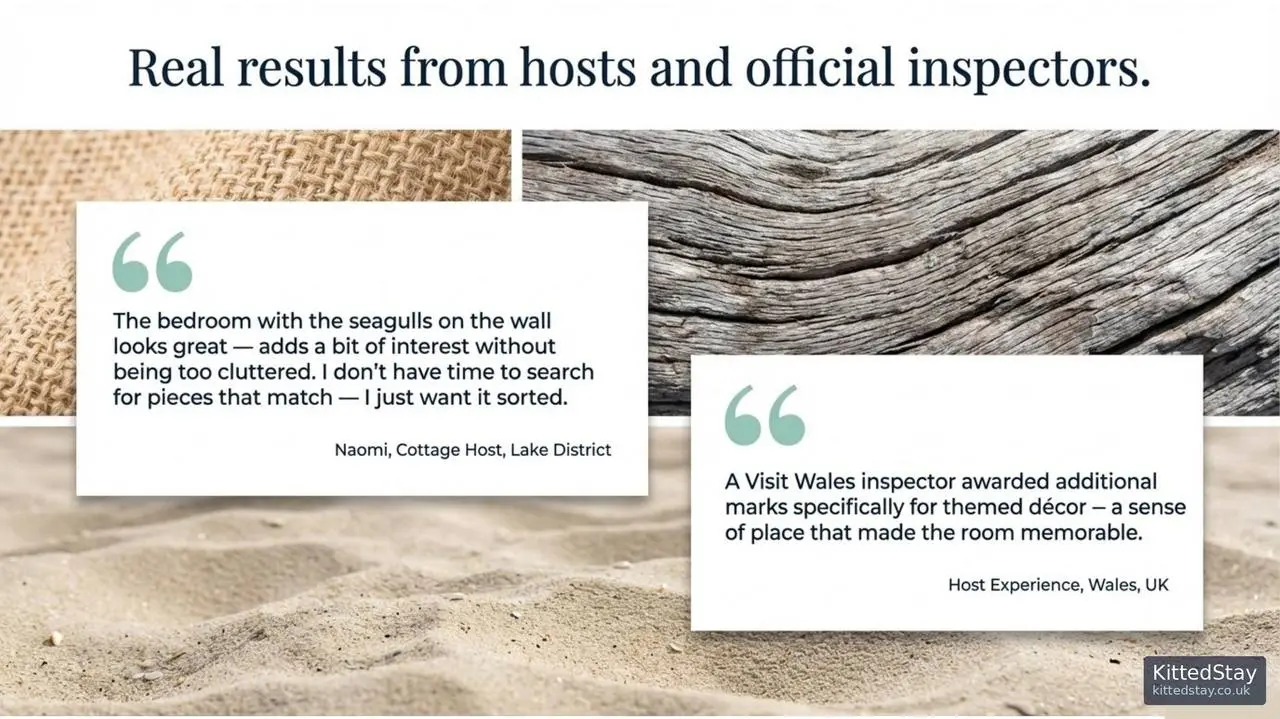
What most hosts do not realise is that Sense of Place — the degree to which a property's décor reflects its specific location and context — is a formal criterion in all three UK tourism board assessments. A room with a coherent coastal or countryside theme scores higher on this criterion than a generic room, regardless of the quality of the furniture or the thread count of the linen. One host in Wales gained an extra star simply by adding a local photography print. A full coordinated kit goes considerably further.
We cover the specific assessment criteria and what inspectors are actually looking for in our companion guide: What VisitEngland’s Sense of Place Really Means for Your Star Rating.
Rewrite your listing description around the experience, not the features
Most BnB and holiday let listing descriptions are written as feature lists: “double bed, en-suite bathroom, flat-screen TV, free WiFi, parking available.” These features are necessary to include, but they are not what persuades a guest to pay a premium. Every comparable property has a double bed and free WiFi. Features do not differentiate; experiences do.
A listing description that leads with the experience — what it feels like to wake up in the room, what the guest will see when they walk through the door, what the theme communicates about the place — creates a different kind of engagement. It gives the guest something to anticipate, something to visualise, something to share with the person they are booking with.
Compare these two opening sentences. First: “Comfortable double room with en-suite bathroom and sea views.” Second: “Wake up in a room that smells faintly of salt air and feels as though the coast is just outside — because it is.” Both are describing the same room. The second is describing an experience. It justifies a premium. The first does not.
The rewrite costs nothing and takes an afternoon. The principle is simple: describe the feeling of the room first, the theme second, and the functional features last. Lead with what the guest will experience; follow with what they need to know.
Accumulate specific, detailed reviews
Reviews drive nightly rates in two distinct ways. The first is obvious: a higher average review score allows a host to price higher while remaining competitive. The second is less obvious but arguably more powerful: the specificity of reviews — the degree to which they mention particular details of the room and experience — increases the perceived credibility and value of the listing to prospective guests.
A generic review (“lovely stay, clean room, great host”) is worth something. A specific review (“the coastal décor was beautiful — we loved the fishing net and the little details everywhere, and the cushions were such a nice touch”) is worth considerably more. It tells future guests exactly what to expect, it validates the host's investment in styling the room, and it makes the listing feel more trustworthy in a way that summary star ratings alone cannot achieve.
Specific reviews come from specific experiences. A room with a coherent, distinctive theme gives guests something concrete to describe — and that description, in the review section, does ongoing work for the listing long after the guest has left. A generic room produces generic reviews; a themed room produces specific ones. Both the volume and the content of reviews are directly influenced by the room's character.
The practical implication: after styling the room and updating the listing photographs, send a follow-up message to guests after their stay that specifically references the room's themed elements and invites them to share their experience. Most guests who stay in a distinctive, well-styled room are happy to do so — they just need the prompt.
How much can you realistically increase your nightly rate?
The honest answer is: it depends on your market, your current rate, and how far below the premium ceiling your room is currently positioned. But for most UK BnB and holiday let owners operating in competitive markets with generic, unstyled rooms, the gap between current rate and achievable rate is larger than they expect.
In established coastal markets — Cornwall, Devon, Dorset, the Norfolk coast, the Northumberland coast — the premium for a well-styled, distinctively themed room over a comparable generic one is typically £10–20 per night. In rural markets — the Cotswolds, the Lake District, the Yorkshire Dales, the Scottish Highlands — the differential is similar. In urban markets, where the competition is denser and the price sensitivity is higher, the premium is typically £8–15.
These are conservative estimates based on publicly available pricing data and host-reported outcomes. In premium locations and peak seasons, the differential can be considerably larger — particularly for properties that have accumulated a body of specific, positive reviews alongside their improved styling and photography.
The compounding effect
What makes the five interventions above particularly valuable is that their effects compound. A room that has been styled coherently photographs better. Better photographs generate more clicks. More clicks generate more bookings, including bookings at a higher rate. More bookings at a higher rate generate more reviews. More specific, positive reviews make future guests more willing to pay a premium. The improved star rating from the tourism board assessment adds further credibility. Social sharing by guests in a distinctive, photogenic room generates organic awareness.
None of these effects is large on its own. Together, they create a flywheel that consistently separates the properties earning £95 per night from those earning £79 for an equivalent room. The initial investment — in styling, in photography, in a rewritten listing description — is recovered within the first few weeks. What follows is compounding return.
The replacement piece advantage
One practical consideration that hosts raising their nightly rate often overlook is the ongoing maintenance of a styled room. Guests in a distinctive, characterful room occasionally take a decorative piece as a souvenir — which is, perversely, a sign that the room made an impression. A room missing a piece of its theme photographs and presents differently from one that is complete.
Individual replacement pieces, sourced quickly when needed and kept consistent with the room's theme, keep the room at the standard that the higher nightly rate was set to reflect. A room that deteriorates from its styled peak — because pieces have gone missing and not been replaced — will eventually see review quality decline, followed by booking rates, followed by the nightly rate itself. Maintaining the room is maintaining the rate. Our FAQ page covers how individual piece replacement works and how to order quickly when needed.
A realistic timeline
For a host starting from scratch — a currently unstyled room, generic listing photographs, no star rating assessment — the timeline to realising a measurable improvement in nightly rate is shorter than most expect.
- Week one: Choose and introduce a coherent room theme. Update the listing photographs once the room is styled. Rewrite the listing description around the experience. These three changes cost little or nothing and can be implemented in a weekend.
- Month one: The improved listing photographs and description begin generating more clicks. Booking rate improves. At the new, higher nightly rate, the investment in styling is recovered within the first five to eight bookings.
- Month three: Specific, positive reviews from guests who experienced the styled room begin accumulating. The listing's review section strengthens. The higher nightly rate becomes self-reinforcing.
- Month six: Apply for or update a VisitEngland, VisitWales or VisitScotland quality assessment, citing the room's themed décor and Sense of Place as part of the submission. A higher star rating adds a further layer of credibility to the premium pricing.
By the end of the first year, a host who has implemented all five interventions can reasonably expect to be operating at a nightly rate £10–20 higher than their starting point, with a stronger review profile, a higher booking rate, and a room that generates organic social sharing by guests. The compounding continues from there.
What does not move the needle
It is worth naming, briefly, the interventions that hosts commonly invest in but that reliably fail to justify a meaningful nightly rate increase. Not because they have no value, but because they are frequently prioritised over the five interventions above — which have greater impact at lower cost.
New furniture rarely justifies a premium unless the existing furniture is genuinely in poor condition. Guests pay for the feeling of the room, not for the age of the wardrobe. A well-styled room with older furniture consistently outperforms a generic room with new furniture in both booking rate and nightly rate.
Smart home technology — smart locks, voice assistants, smart TVs — is valued by some guests but is rarely the deciding factor in a booking or the justification for a premium. It is a hygiene factor, not a differentiator.
Expensive linen and towels improve the in-room experience, which contributes to reviews, but they are invisible in listing photographs and therefore do not directly influence the guest's initial pricing decision. They are worth having; they are not worth prioritising over styling and photography.
Professional photography of an unstyled room is the most common expensive mistake in holiday let marketing. It produces high-quality images of a generic space. The quality of the photography cannot compensate for the absence of something worth photographing.
The pattern across all four is the same: they improve the functional or technical quality of the offering without changing what the room communicates. And it is what the room communicates — its perceived character, its visual distinctiveness, its coherent identity — that determines what guests are willing to pay for it.
The rate your room deserves
There is a nightly rate that your room currently charges, and there is a nightly rate that your room could charge. The gap between them is not fixed. It is not determined by your location or your competition or the state of the market. It is determined, in large part, by what your room looks like and what it communicates to a guest making a booking decision in three seconds on a mobile screen.
The five interventions in this article are not a guarantee of any specific increase. Markets vary, locations vary, and the starting point matters. But they are the specific, low-cost changes that consistently move the needle for UK BnB and holiday let owners — because they address the thing that actually drives willingness to pay, rather than the things that are easier to measure but matter less.
Style the room. Photograph it properly. Pursue the star rating. Tell the story in the listing. Collect the reviews it earns. The rate follows.
Start with the room.
The KittedStay Coastal Kit — 8 coordinated pieces that give your room a coherent story in under 10 minutes. Aligned with VisitEngland, VisitWales and VisitScotland criteria. Delivered across the UK within 48 hours.
Get Your Kit from £79Frequently Asked Questions
The questions UK BnB and holiday let owners ask most often about raising their nightly rate without major investment.
The improvement in click-through rate from search results typically begins within the first week of updating the listing cover photograph. This is the most immediate and measurable change — more guests clicking on the listing from search results, which translates into more enquiries and bookings at the new rate within the first four to six weeks.
The nightly rate increase itself should be implemented at the same time as the photograph update, not after. A well-styled room with a strong listing photograph supports a higher price immediately. Waiting to increase the rate until after you have seen more clicks means leaving revenue on the table during the period when the listing is gaining momentum.
For most hosts in competitive UK markets, the investment in styling is recovered within the first five to eight bookings at the improved rate. The compounding effect — better reviews leading to more bookings at a sustained higher rate — builds over the following three to six months.
The honest answer is to test. A conservative starting point is £8–12 more per night — enough to be meaningful but not so much that it creates resistance from guests who have already been booking at the current rate. After the first month of data at the new rate, you will have a clearer picture of whether the market is accepting the increase without a drop in booking rate.
In established coastal and countryside markets — Cornwall, the Lake District, the Cotswolds, the Scottish Highlands — the ceiling is often higher than hosts expect. Properties with strong visual identities and accumulating positive reviews frequently sustain premiums of £15–20 per night over comparable generic rooms. The key is not to anchor to your current rate as a reference point. Anchor to what the market will pay for a room that looks and feels the way yours now does.
If you are participating in a VisitEngland, VisitWales or VisitScotland quality assessment, a higher star rating provides additional pricing headroom. A four-star property can credibly charge more than a three-star one with an identical physical spec, because the rating signals independently verified quality.
Yes — and this is the part of the calculation most hosts underestimate. A higher nightly rate on its own is valuable. A higher nightly rate combined with a higher occupancy rate is transformative. The two effects compound in a way that a simple rate calculation does not capture.
A well-styled room with a strong listing photograph generates more clicks from search results than a generic room at the same price. More clicks translate into more bookings, which means higher occupancy. At the same time, the improved rate means that each of those additional booked nights contributes more revenue than before. The combined effect — more nights booked at a higher rate — is what produces the £1,500–2,200 annual improvement that consistently emerges from host-reported data.
The occupancy improvement is also self-reinforcing. More bookings mean more reviews. More reviews mean higher credibility. Higher credibility means guests are less price-sensitive and more willing to book without extensive comparison shopping — which means the rate can be sustained and eventually increased further.
Good reviews confirm that guests are satisfied. They do not, on their own, justify a premium nightly rate — because guests are comparing your listing photograph, not your review history, when they make their initial pricing decision. A room with strong reviews but a generic listing photograph will consistently be undercut by a room with slightly fewer reviews but a distinctive, memorable visual identity.
Read your reviews carefully. If they consistently use words like “comfortable”, “clean” and “good value”, they are describing satisfaction. If they use words like “beautiful”, “special”, “loved the décor” or describe specific details of the room, they are describing memorability. Only the second category supports a sustained rate premium.
The gap between a room with good reviews and a room with enthusiastic, specific reviews is almost always the room itself — specifically, whether it has a clear visual identity that gives guests something concrete to describe. Addressing the room first, then the photograph, then the listing description is the sequence that consistently closes that gap. Our guide on why guests don’t come back explores this distinction in depth.
Raise it immediately — at the same time as you update the listing photograph. The photograph and the rate are a single package: the photograph communicates that the room is worth more, and the rate reflects that. Updating the photograph without raising the rate means doing the work and not claiming the reward.
There is a psychological dimension to this that is worth understanding. A room listed at a higher rate is perceived by guests as being in a different category from the same room at a lower rate, even if nothing else changes. Price is itself a signal of quality. A well-styled room priced at £89 per night reads differently to a guest than the same room at £79 — and in a competitive market, that difference in perception can actually increase booking rates rather than decrease them, because it positions the room as a deliberate choice rather than a fallback option.
The practical approach is to increase by £8–12 immediately, monitor the booking rate over the following four weeks, and adjust further based on what the data shows. Most hosts find that the initial increase is accepted without resistance and that there is room for a further adjustment once the first wave of positive reviews from the newly styled room has accumulated.
Often yes — and usually for the better. Guests who book at a higher rate tend to be less price-sensitive and more experience-focused. They are booking a room because it appeals to them visually and thematically, not because it was the cheapest available option. This typically means they are more likely to treat the room with care, more likely to leave a detailed positive review, and more likely to return or recommend the property to others.
The guest who books the lowest-priced room in a search results page and the guest who books the most visually distinctive room are often different people with different priorities. The first is optimising for cost; the second is optimising for experience. A well-styled room with a higher nightly rate self-selects for the second type — which is better for the room, better for the reviews, and better for the long-term reputation of the property.
This is one of the less-discussed benefits of investing in room styling: it is not just about earning more per night. It is about attracting a guest profile that is more likely to contribute positively to the property’s reputation and review history over time. The hidden cost of a generic room includes not just the rate differential, but the cumulative effect of attracting guests who leave generic reviews rather than enthusiastic ones.